
- Hits: 17366
Shadwell Karate Club Sensei
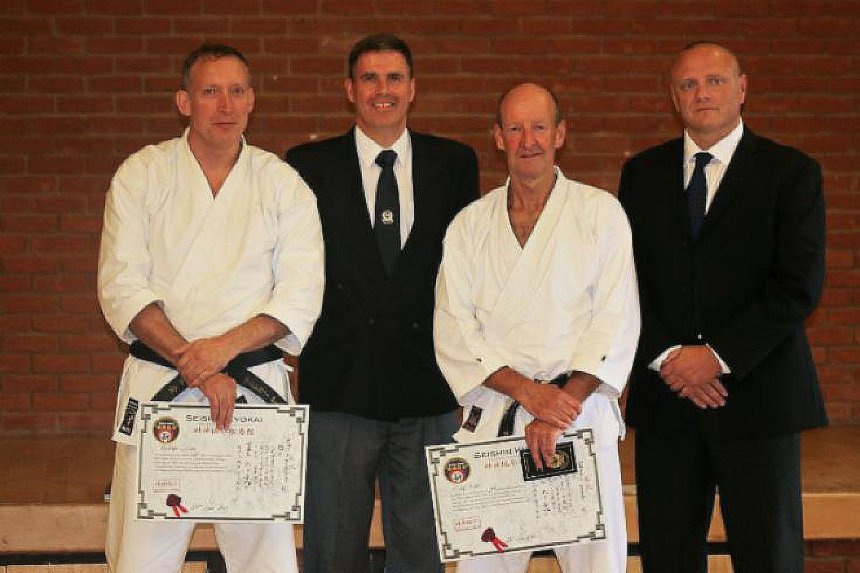
Pictured left to right: Andrew Gulson (Shadwell Karate Club Chief Instructor), Phil Shire (SLKC Chief Instructor and Seishin KyoKai founder), Phil Pryor, Martin Reynolds (Shoshin Karate Club, Potters Bar Chief Instructor)
|
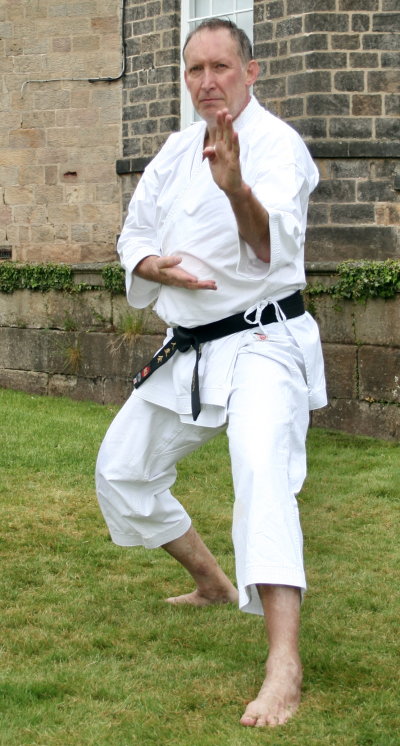
Andrew Gulson, 4th Dan - Chief Instructor The Mirai Dojo is now permanently closed, however Sensei Andrew Gulson has now opened a new club under the umbrella of Seishin KyoKai Karate Association in Shadwell
|
 |
- Hits: 17802
Gradings
Between starting training in karate and gaining your first black belt there are ten formal gradings, assessed by performance in front of a panel of at least one instructor. Gradings involve aspects of kihon, kata and kumite as well as the student's general attitude and character as expressed in their karate. The grading syllabus was devised by the founding sensei of Seishin KyoKai and is available to students on becoming members of the Mirai Dojo. An adult student progressing through the kyu grades will be eligible to grade roughly every 3 months, subject to satisfactory attendance and achievement of the required standard. So in theory it is possible to reach first dan black belt within two and a half years; however in reality most students feel the need to slow down and take more time to develop the skills required at the more demanding purple and brown belt stages. Three to five years is a more realistic expectation.
For under-16's, especially the youngest students, progressing from beginner to black belt in just ten steps will often be too challenging. Children's minds and bodies are still developing and they cannot be simply treated like small adults in the dojo. A system of sen grades therefore applies to children. Sen grades are intermediate steps between the kyu grades which can be used to reward and mark progress in smaller steps than would be expected of adult students, and so provide the additional encouragement children often require. In the case of older children, and those with particular ability, the instructor and grading panel can exercise judgement and accept younger students attempting the full kyu grade, depending on the individual case. However, this is the exception rather than the rule.
Students wishing to attempt gradings need permission of the instructor to do so, be in possession of a current Seishin KyoKai licence and have paid the grading fee. The instructor's decision regarding permission to grade is final, as is the decision of the grading panel.
A copy of the full Seishin KyoKai kyu (or sen) grading syllabus is given to students on becoming members of the club.
Dan Grades (Black Belts)
|
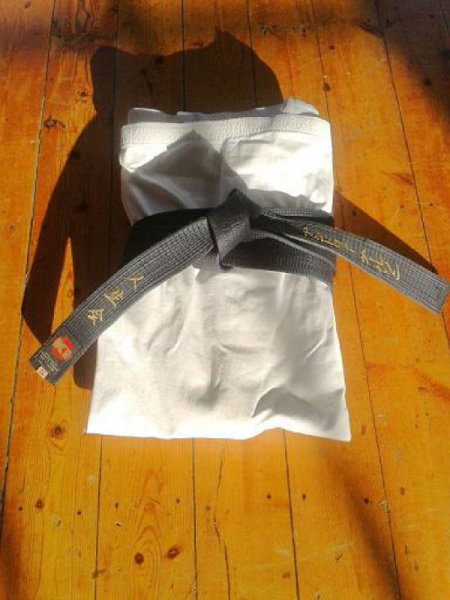
Having been awarded the rank of 1st Dan (Shodan) black belt, you will have had to train with increasing intensity, consistency and determination for several years. It's an achievement not to be underestimated and everyone who has successfully completed the process will agree what a meaningful event it is for them. However, it is also true that gaining shodan means that the student has attained a basic level in proficiency in at least the majority of the techniques, kata and kumite drills on the syllabus - and little else! It is what happens afterwards that really counts: the new holder of a black belt will slowly realise that there is much, much more to karate than what can be written down on paper, and that the progress towards real mastery might well continue for the rest of their lives. There is, having said this, a further syllabus and grading system to mark the progress of the dan grade student, at least up to 4th or 5th Dan. But the steps are much more widely spaced than before; a student must wait a minimum of two years after their shodan grade before being eligible for Nidan (2nd dan), and three years between that and Sandan (3rd dan), etc. Most students take longer than these minimum times between gradings and many come to regard training as an end in itself and are content not to attempt the next Dan grade for significant lengths of time. So while there are many children who gain Shodan and perhaps Nidan grades, there are none to my knowledge who are Godan (5th dan)!. |
 |
- Hits: 18126
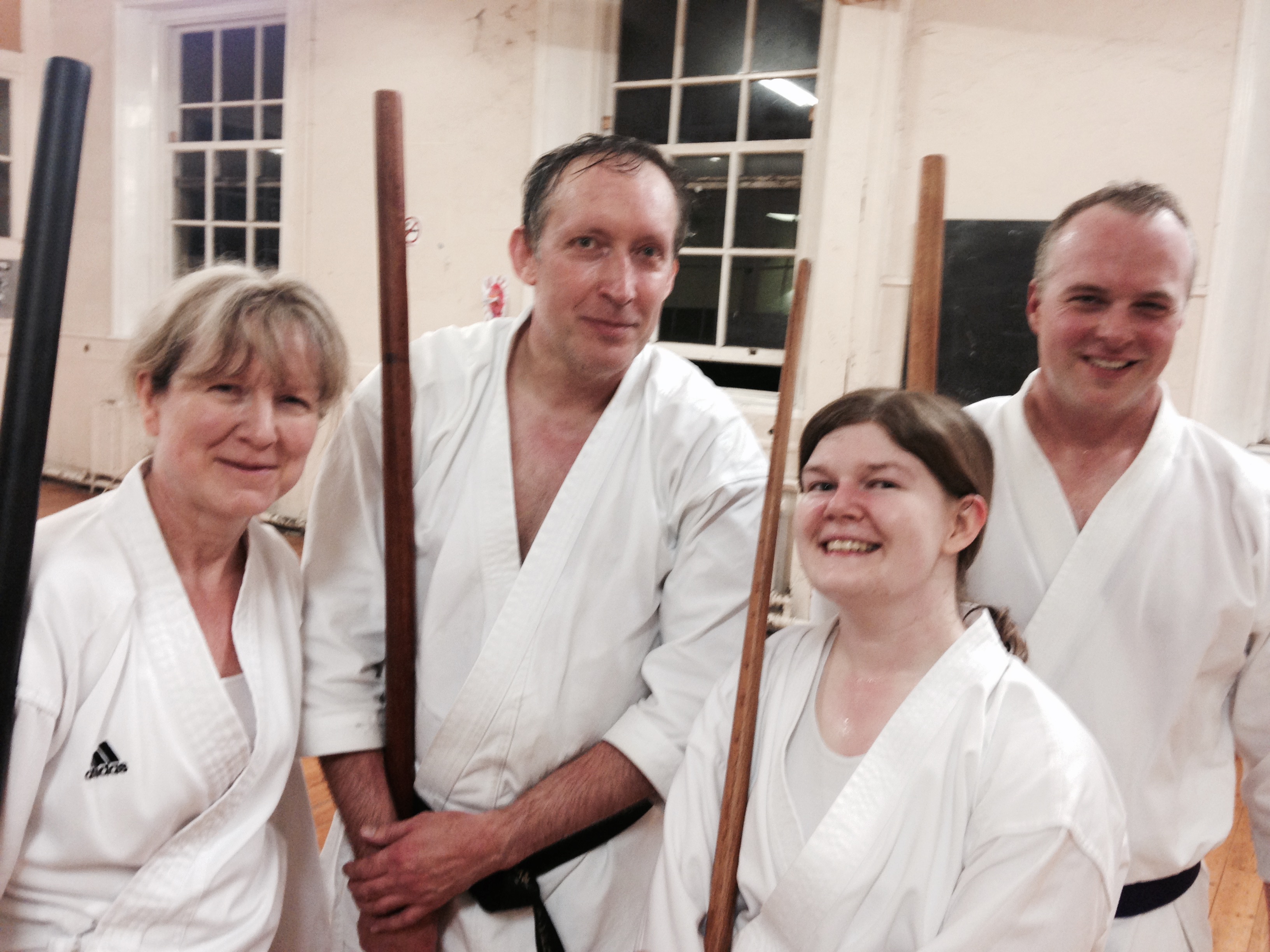
Shadwell Karate in Action
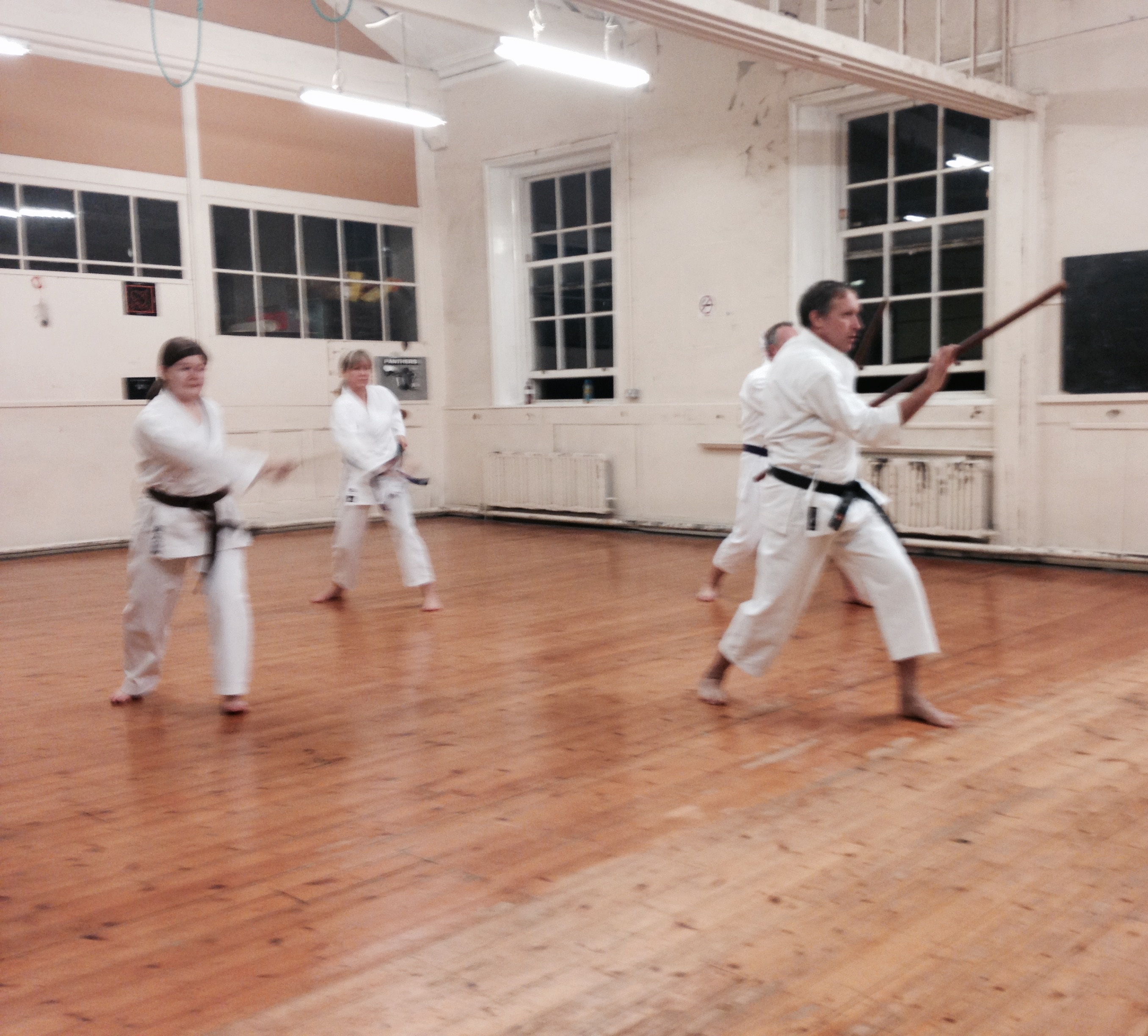

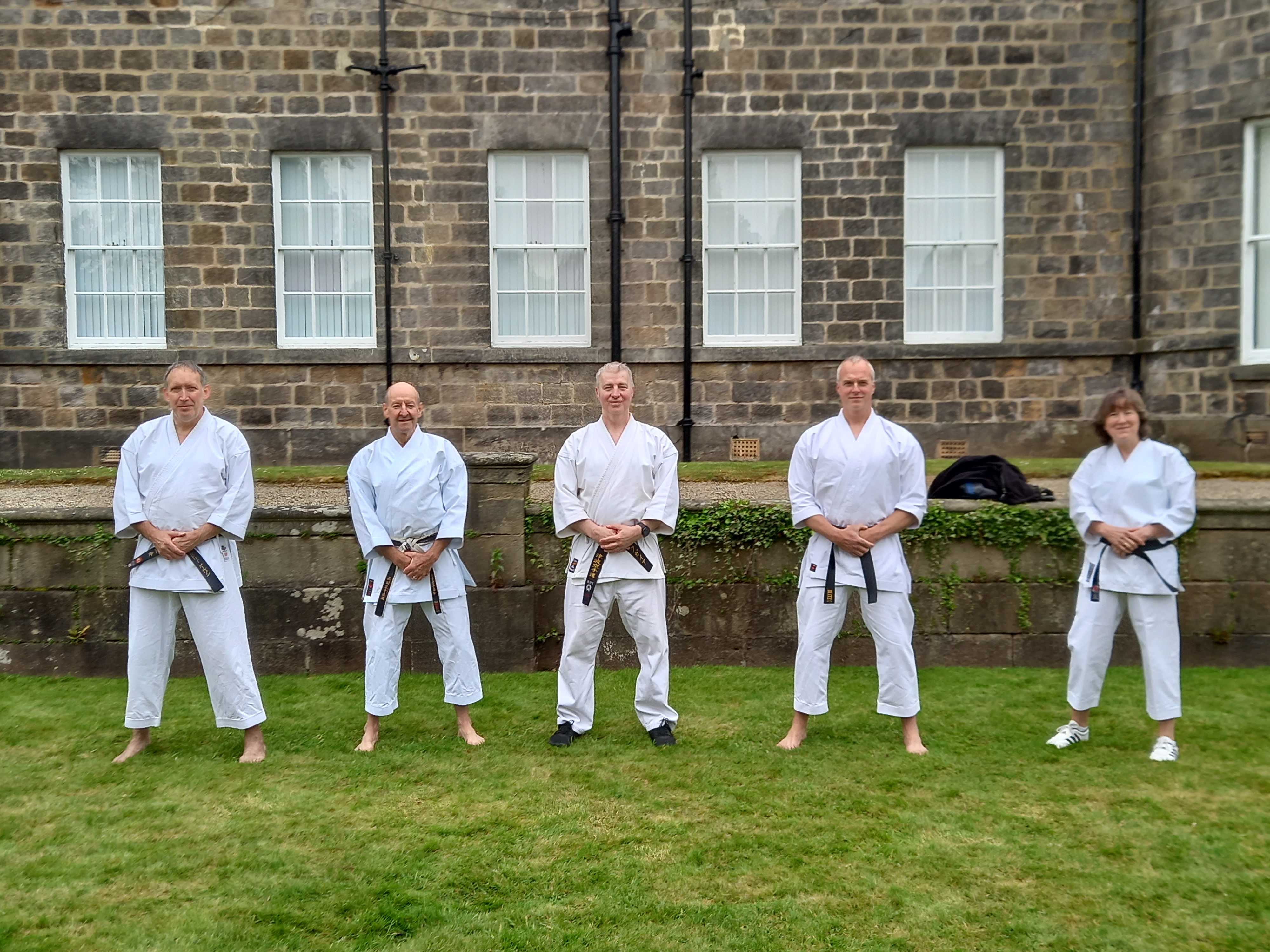
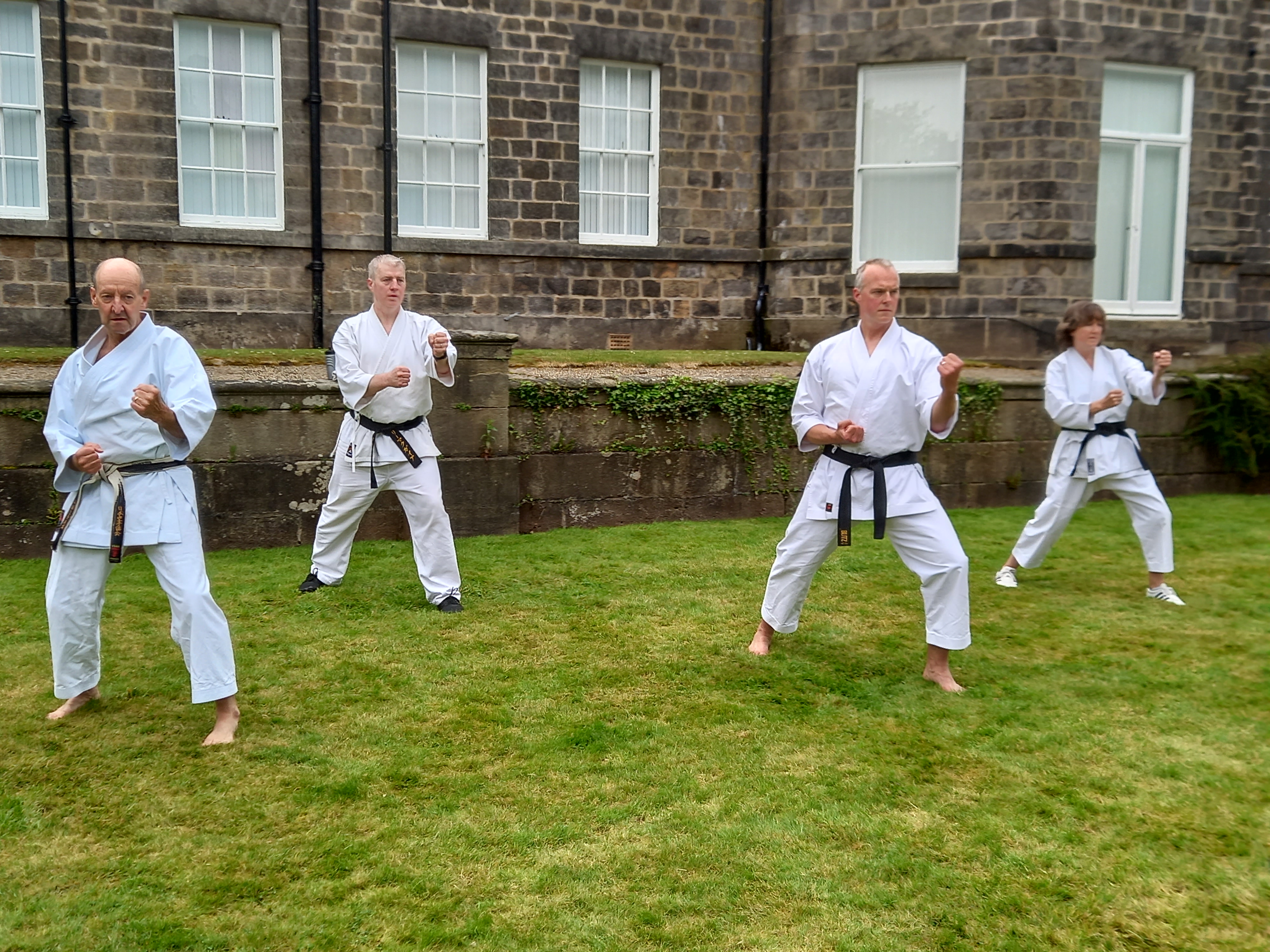
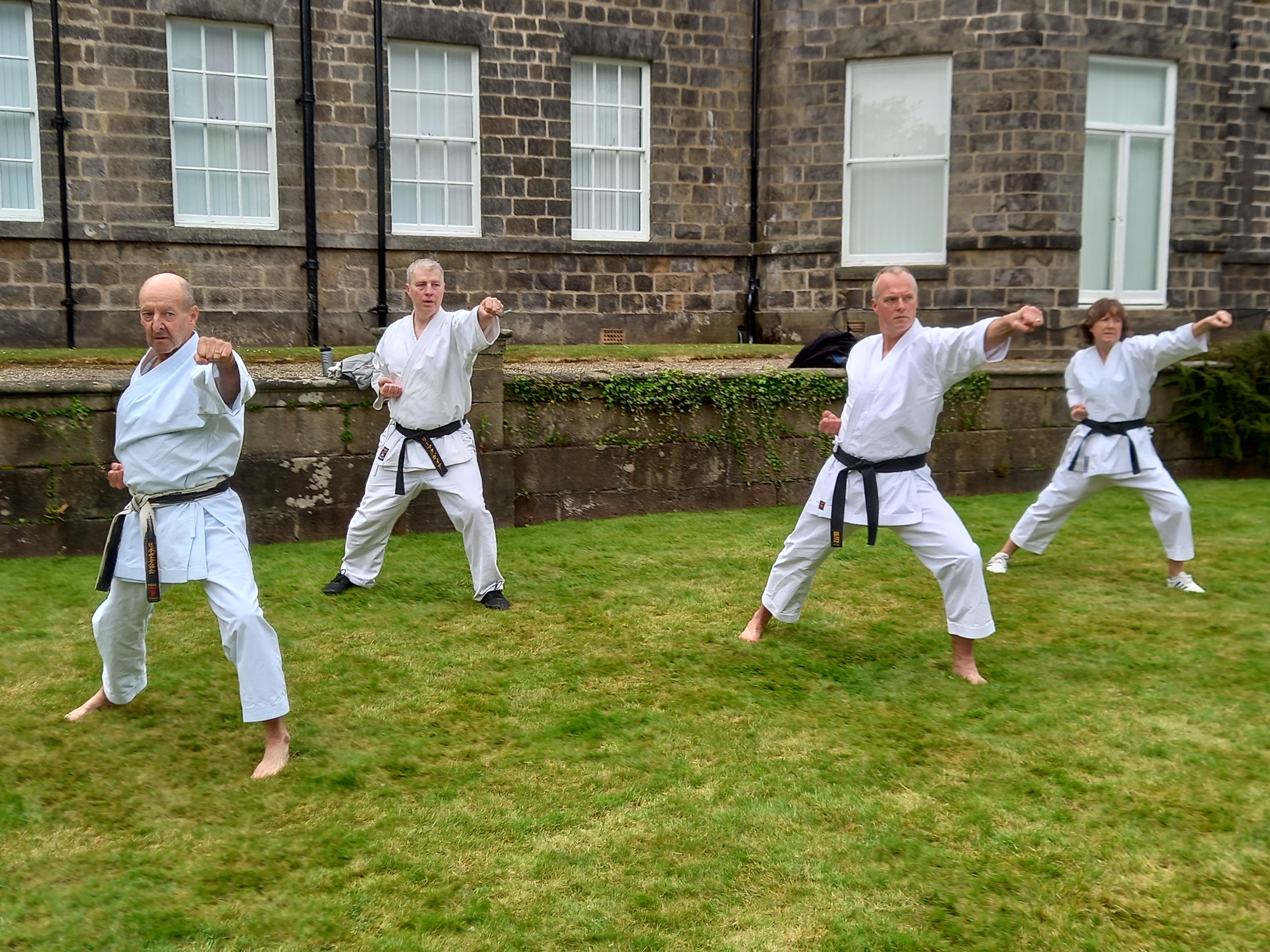
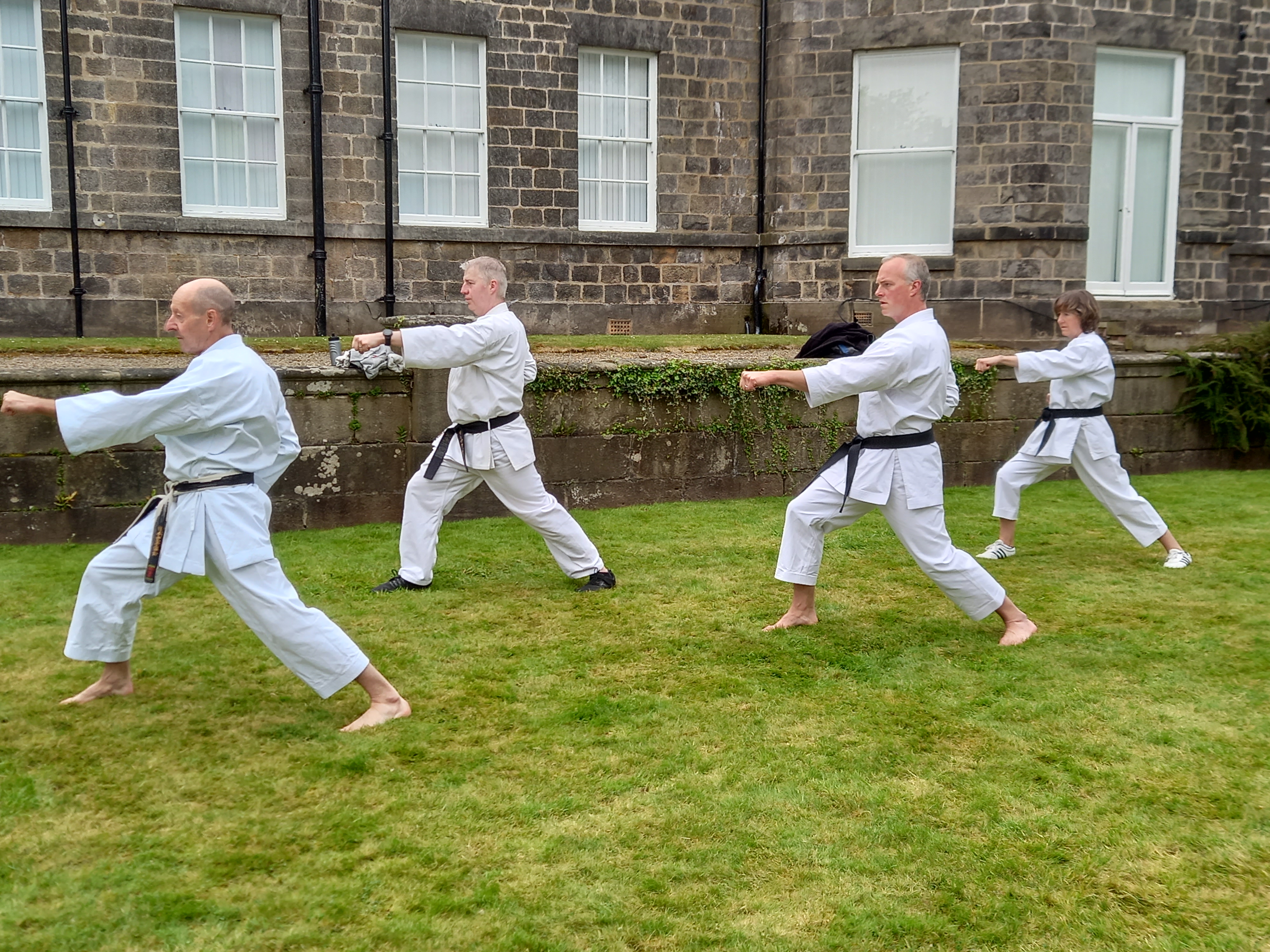
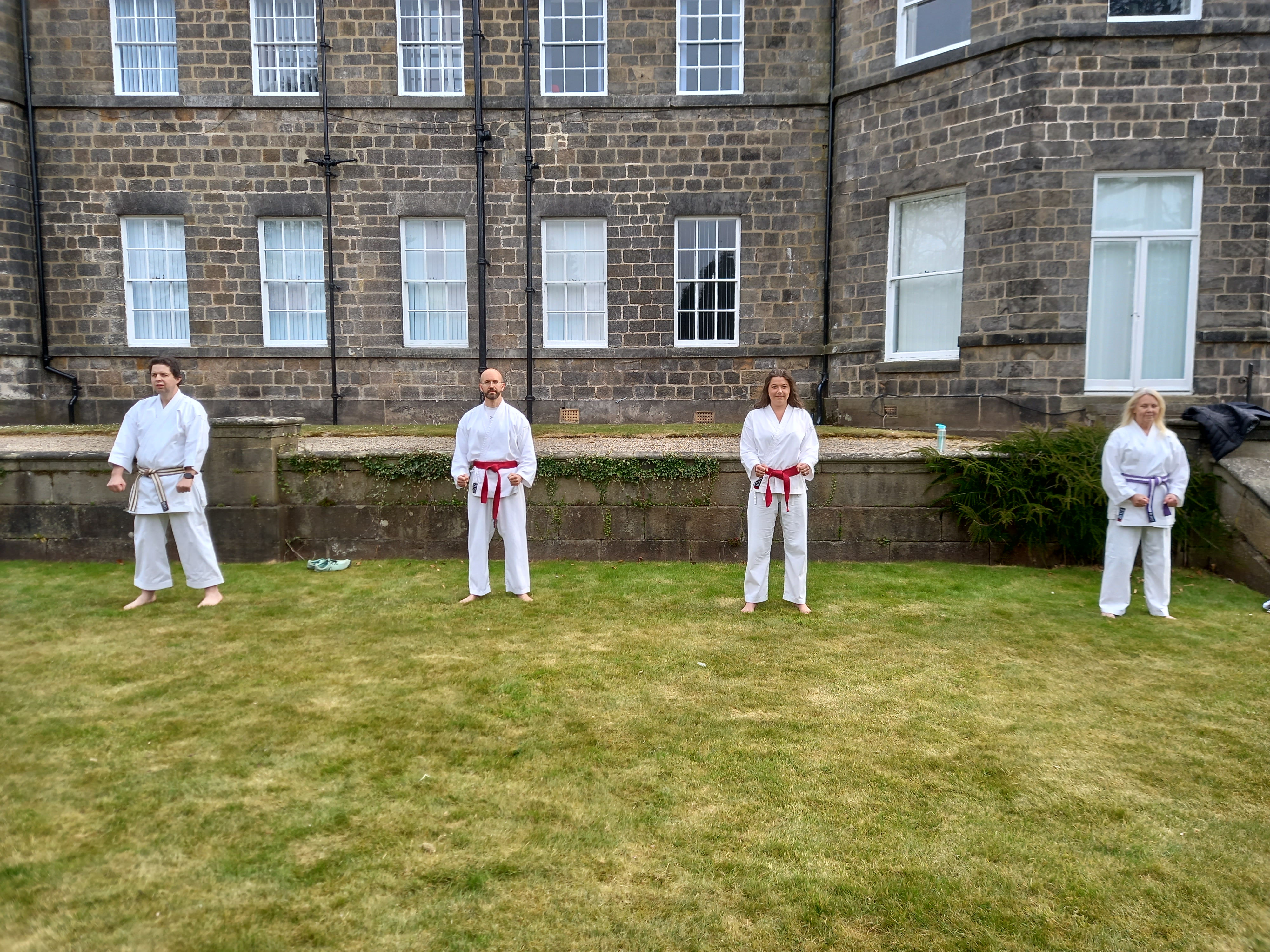
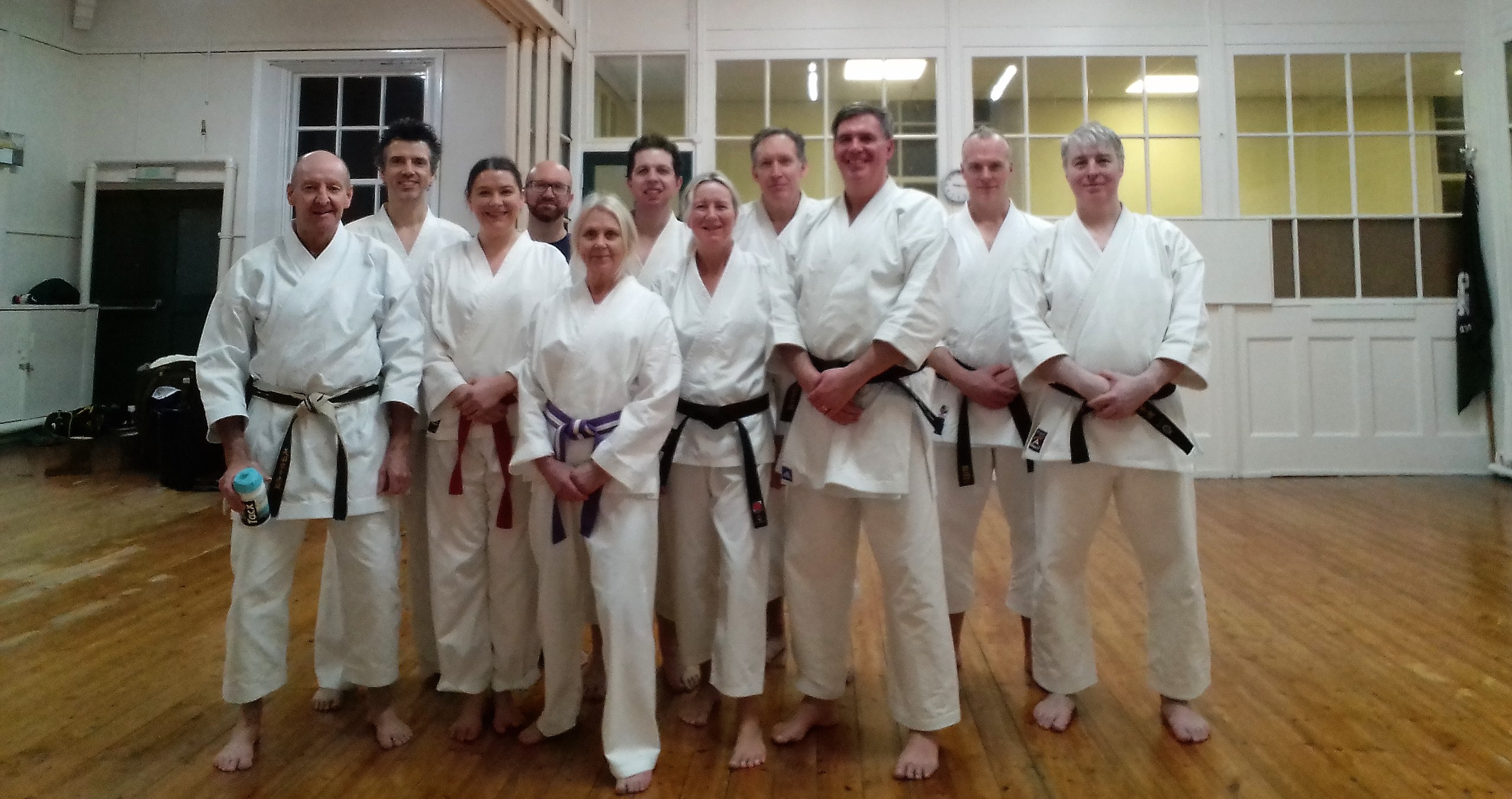
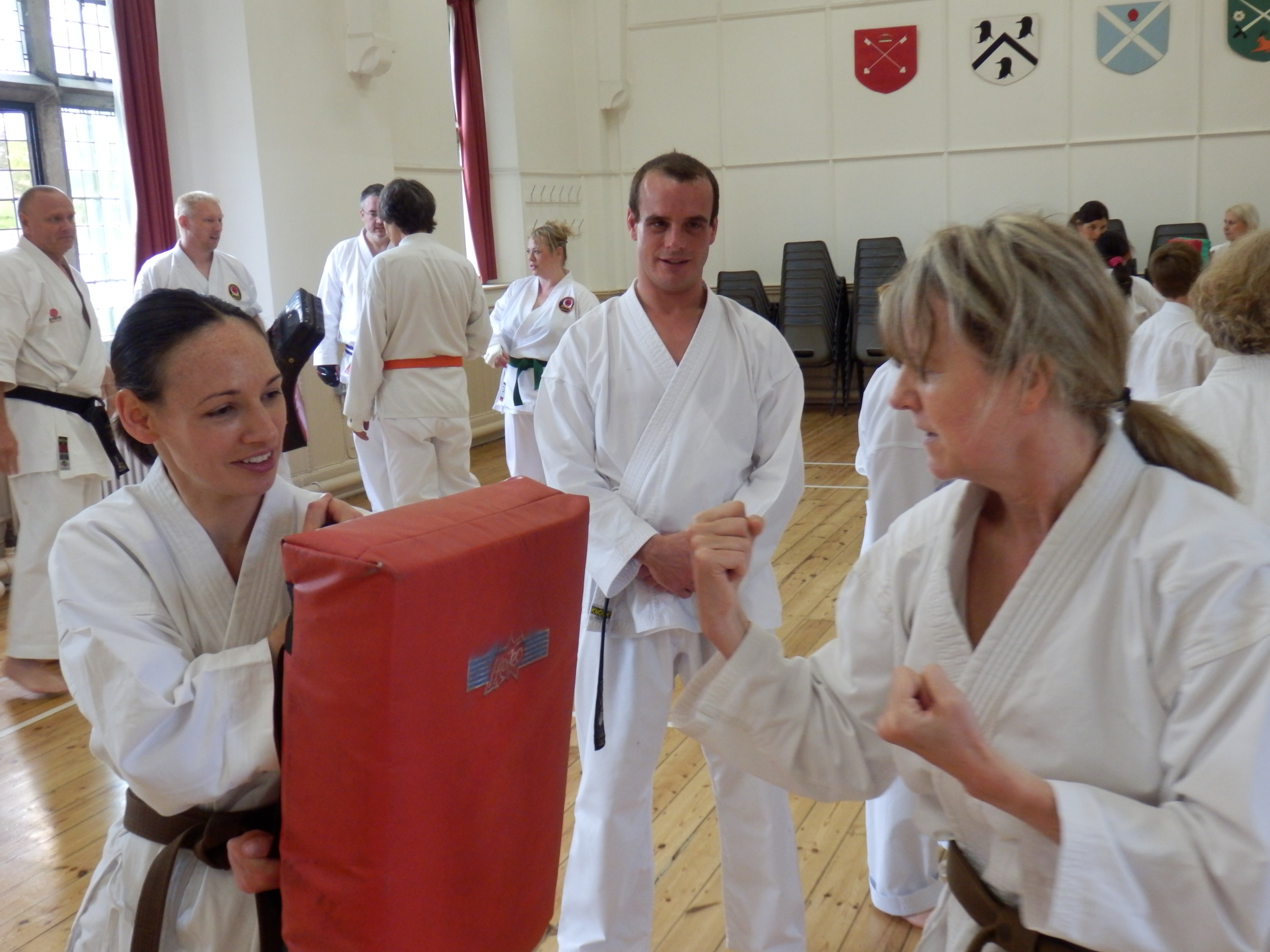
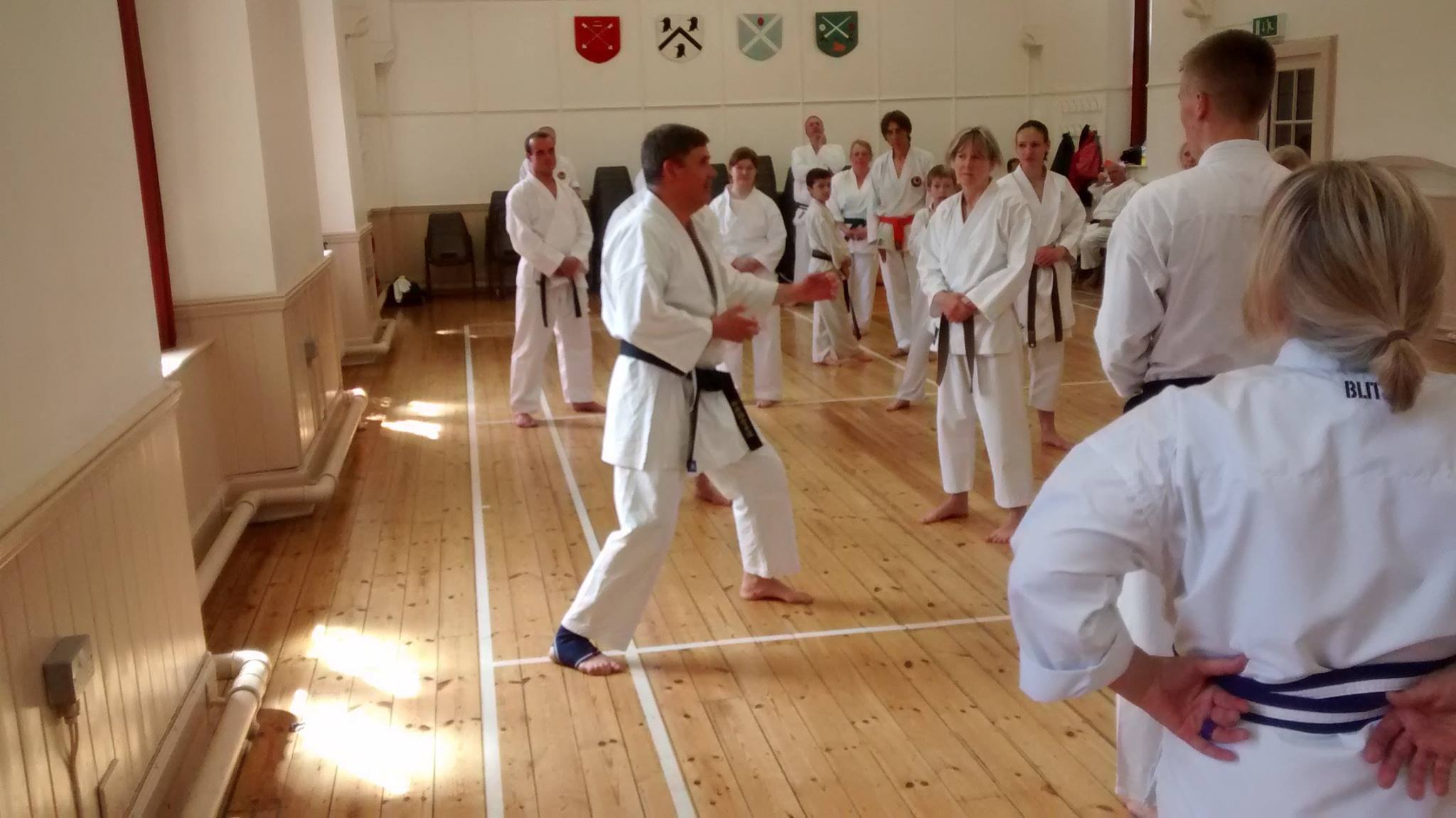
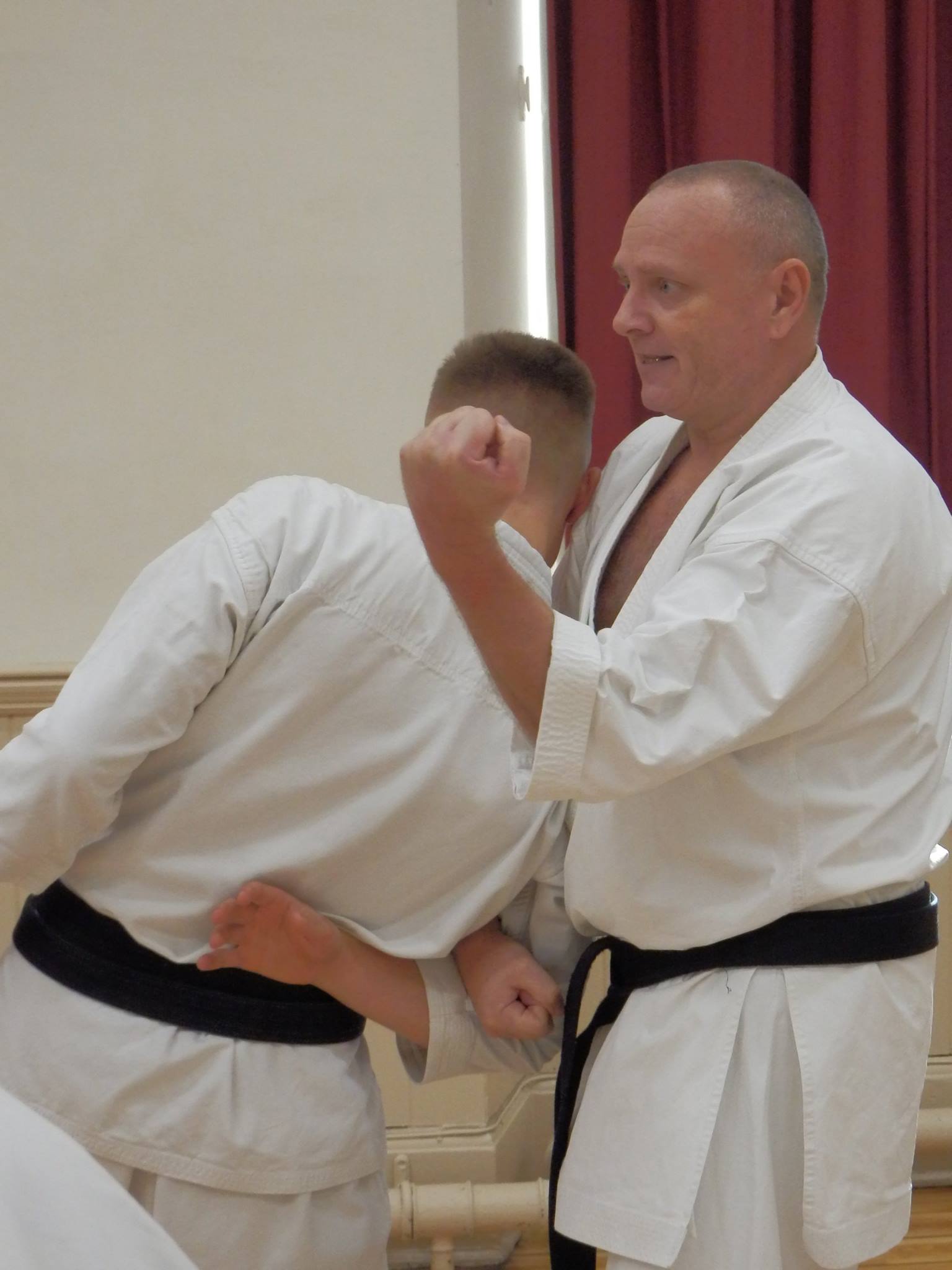

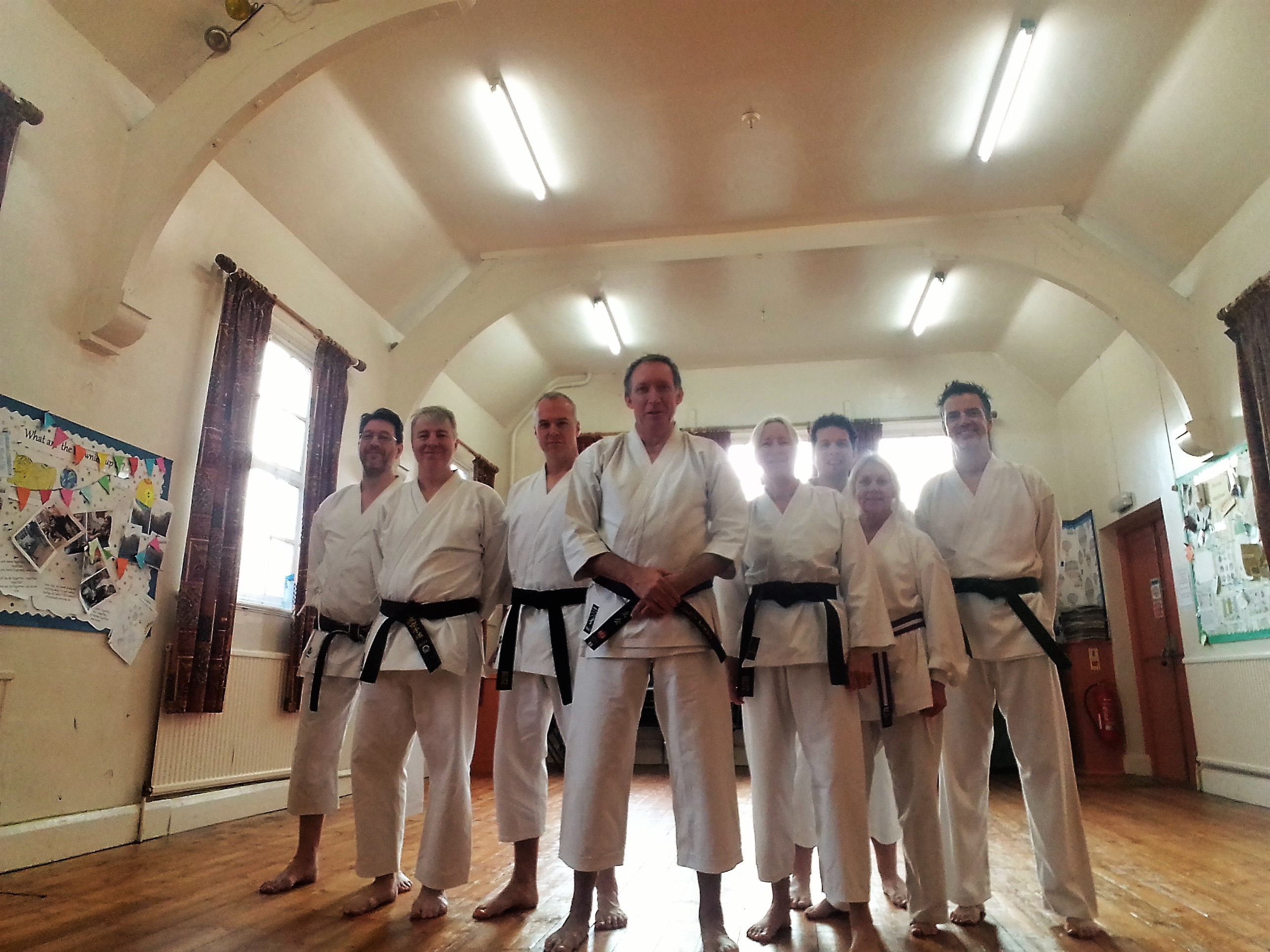
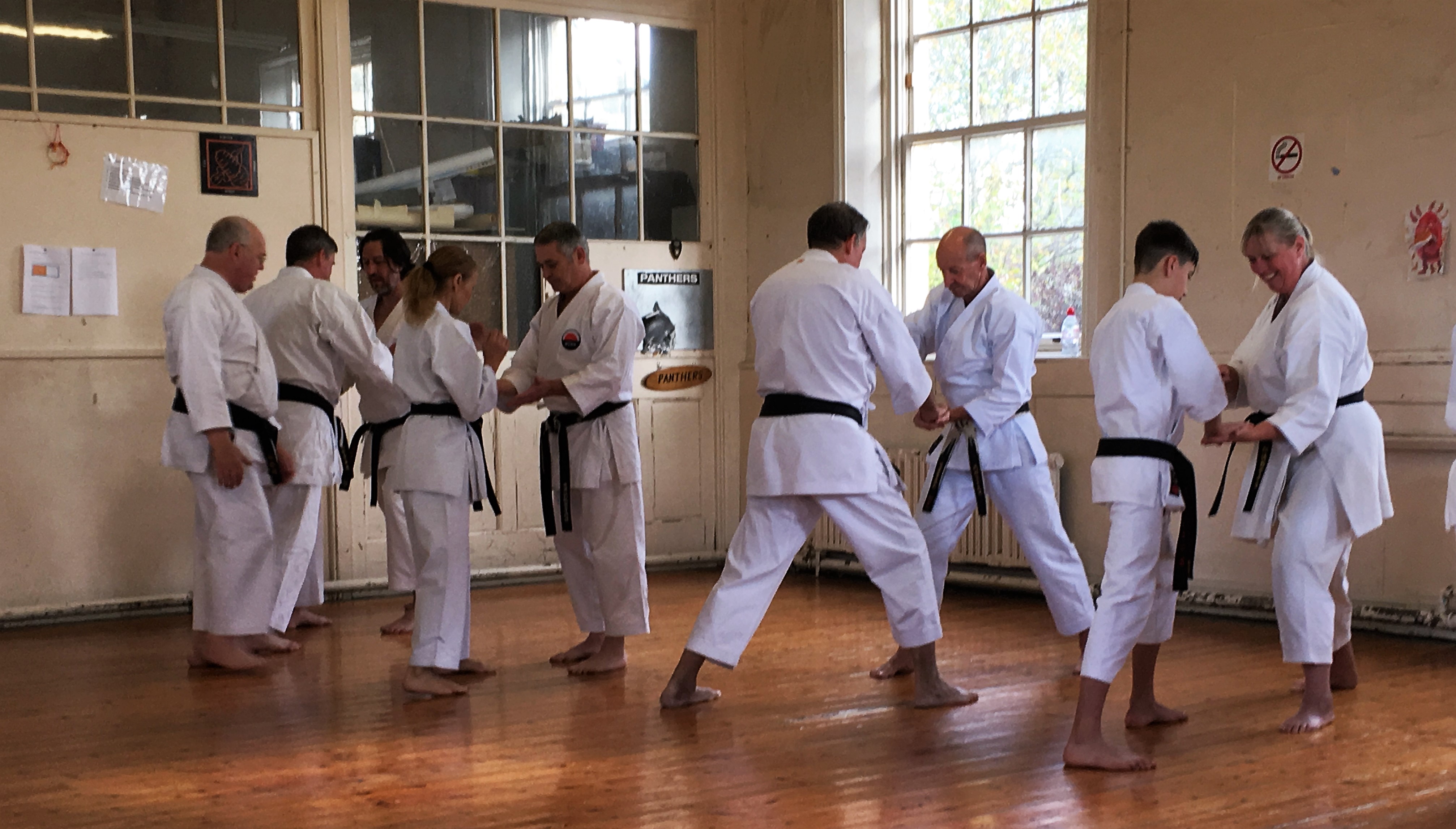
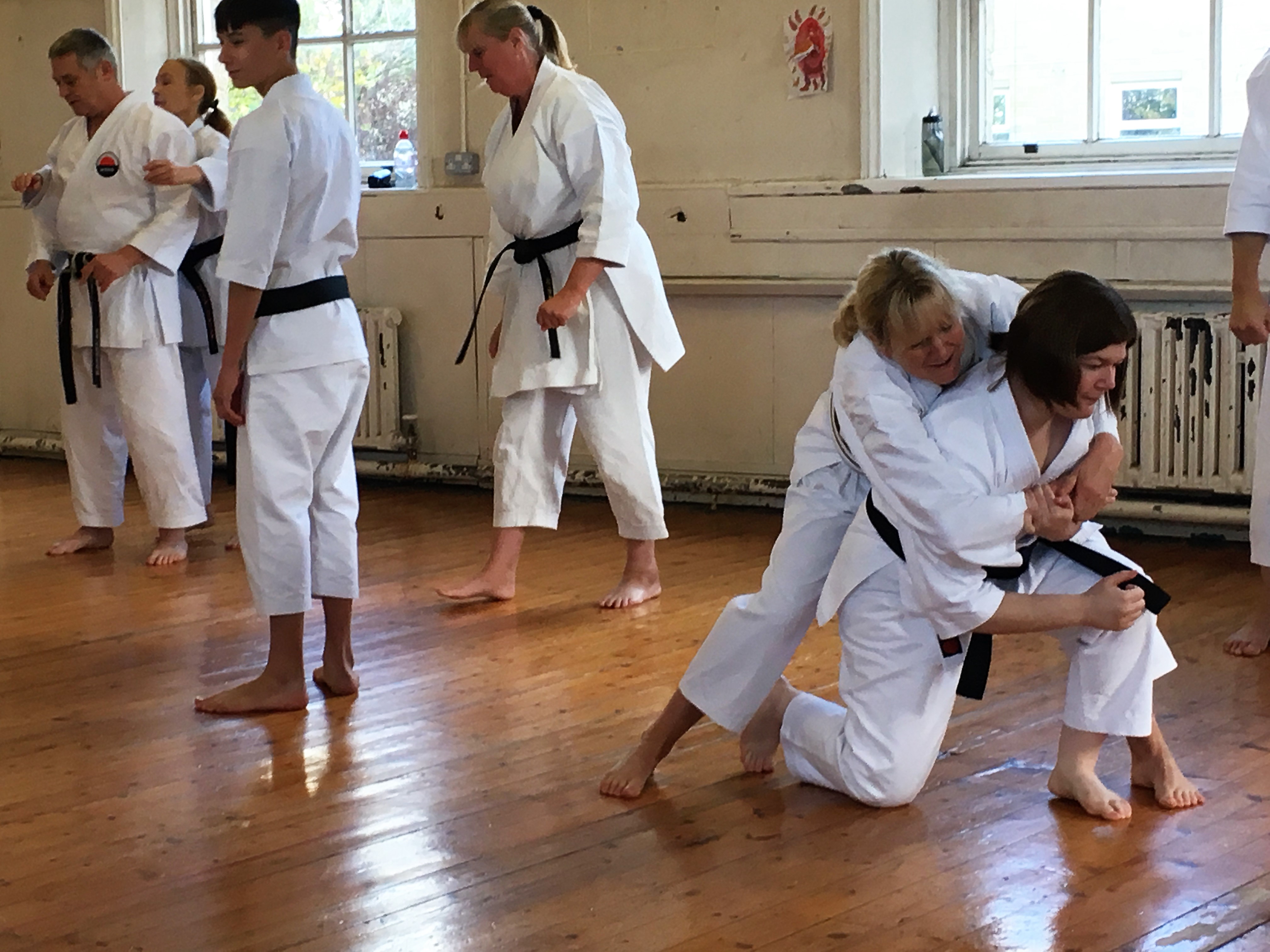
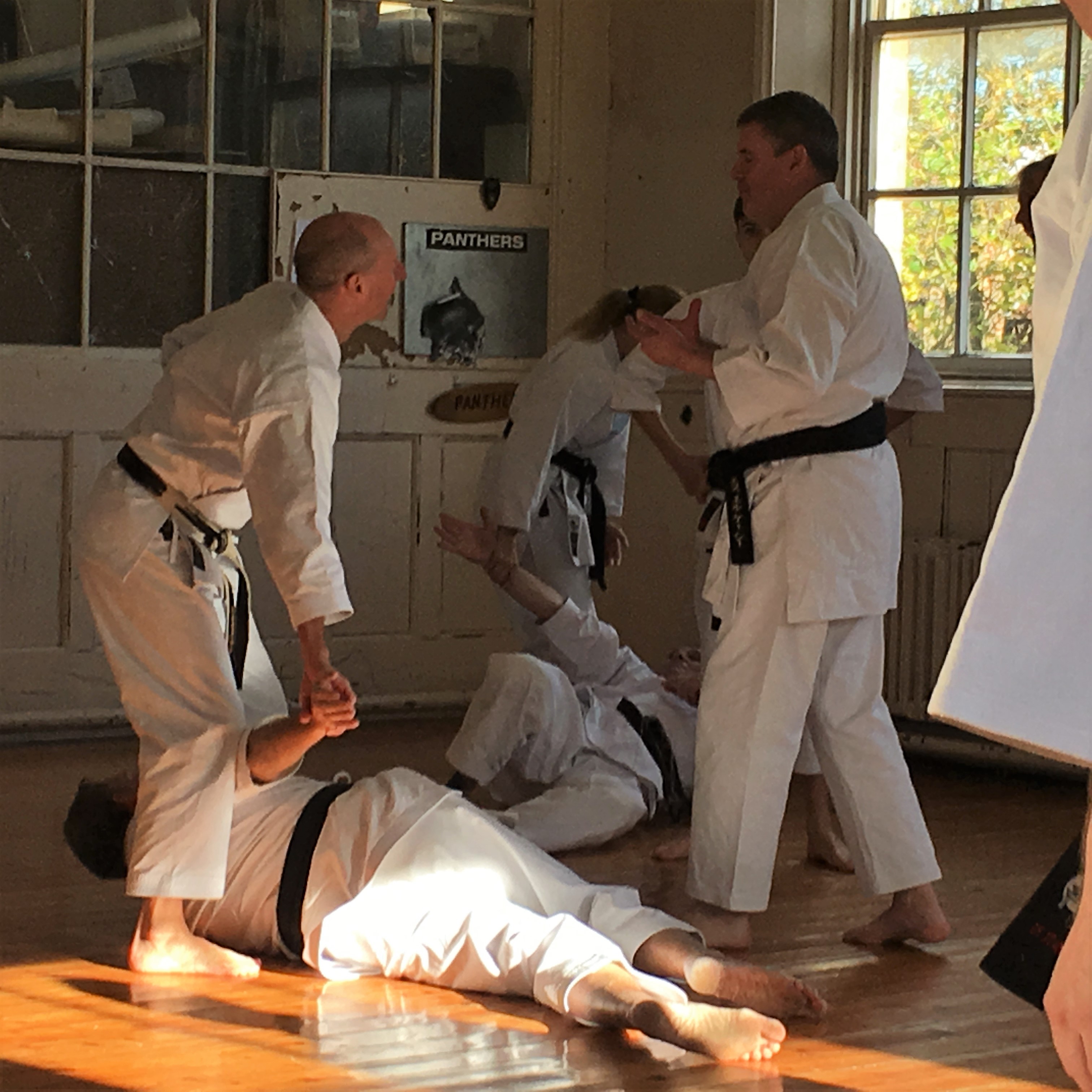
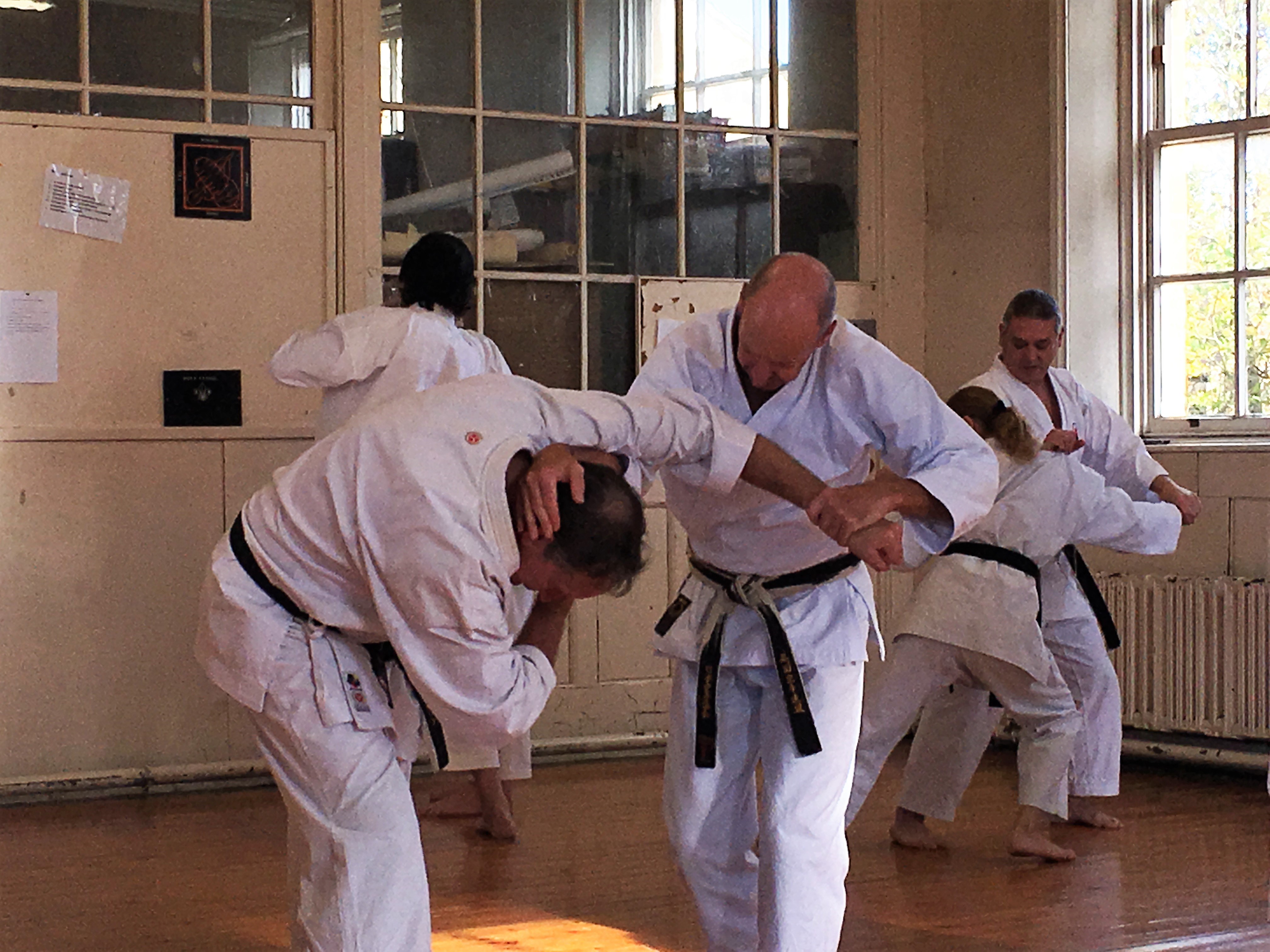
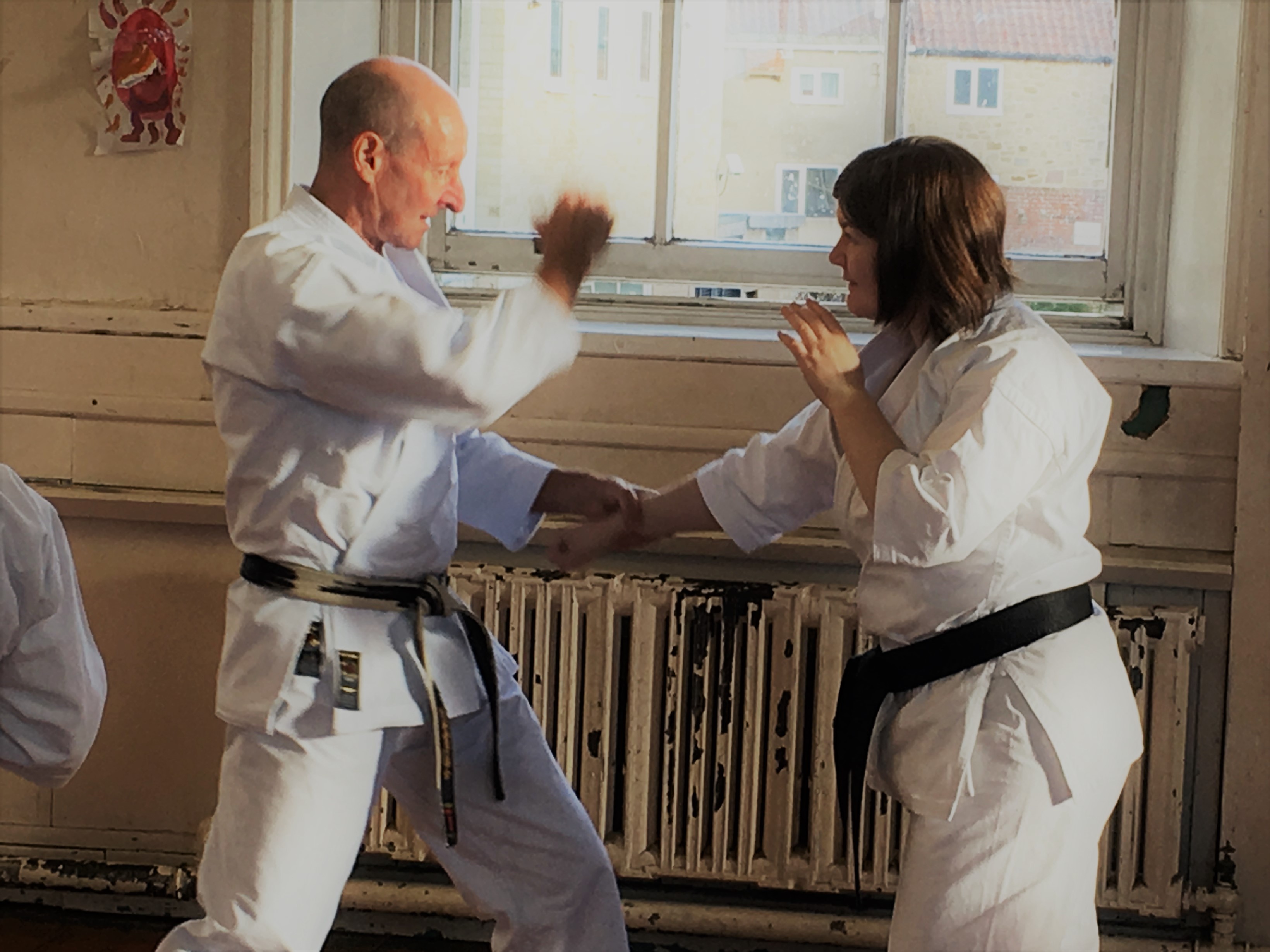
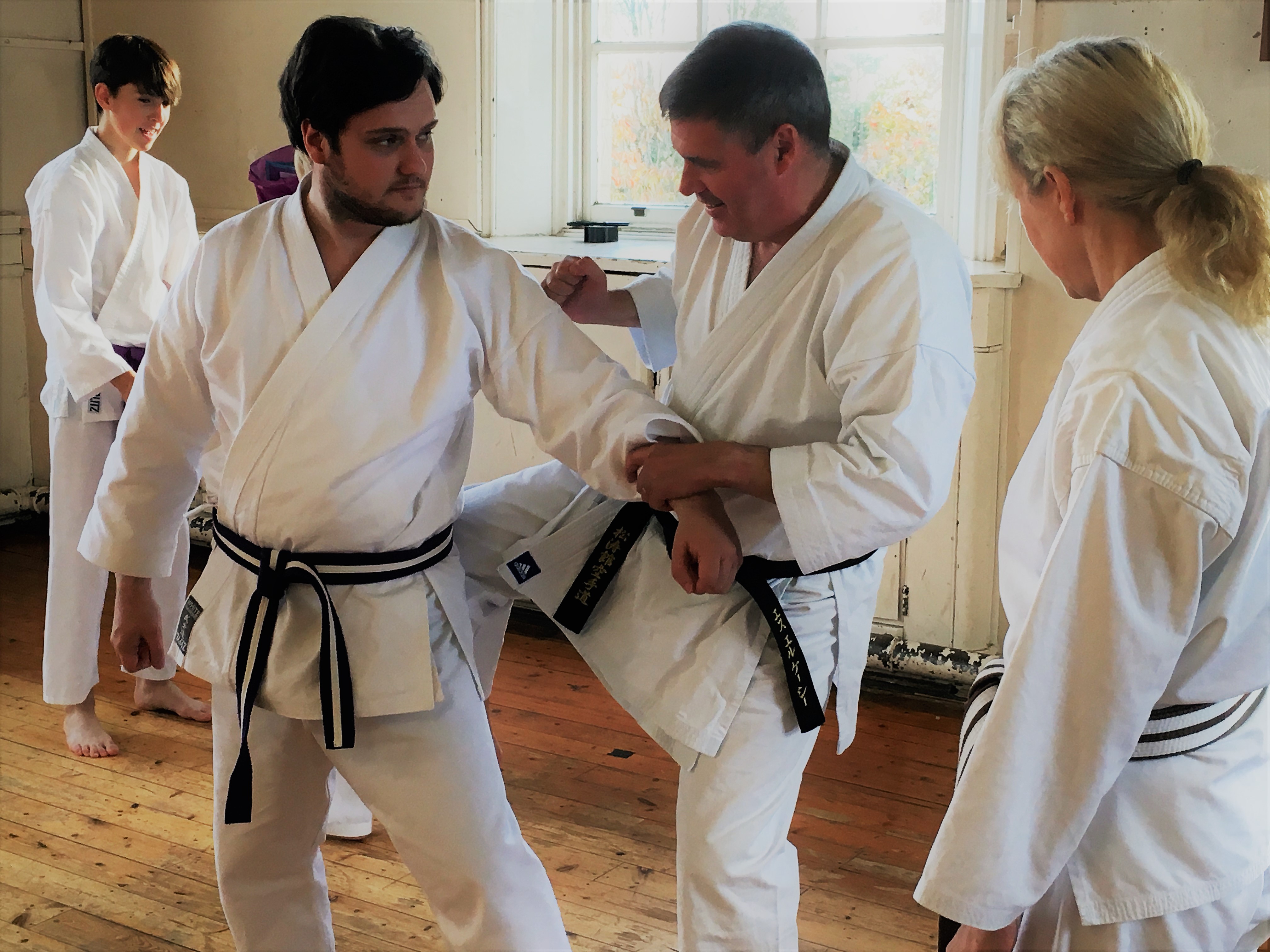
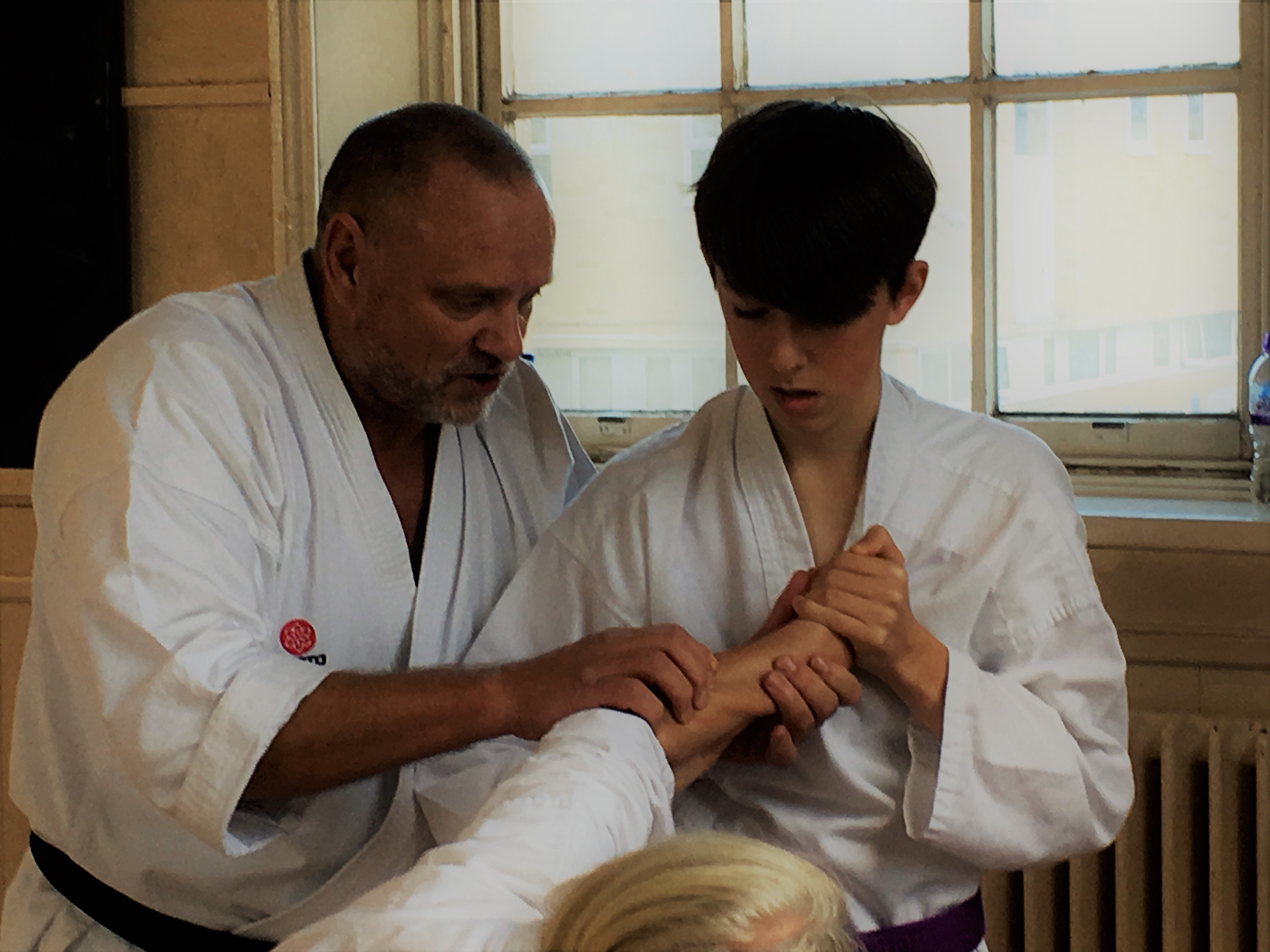
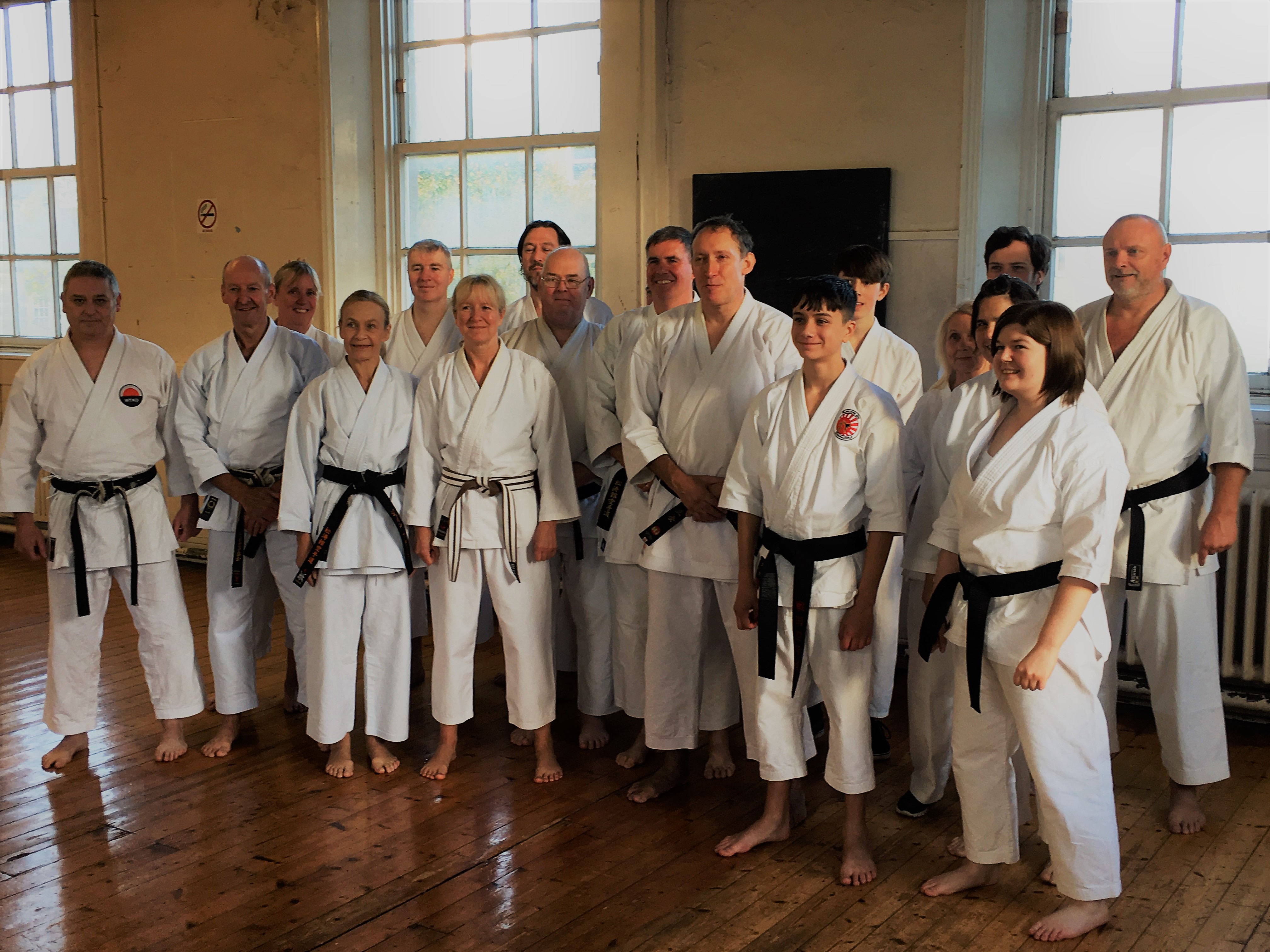
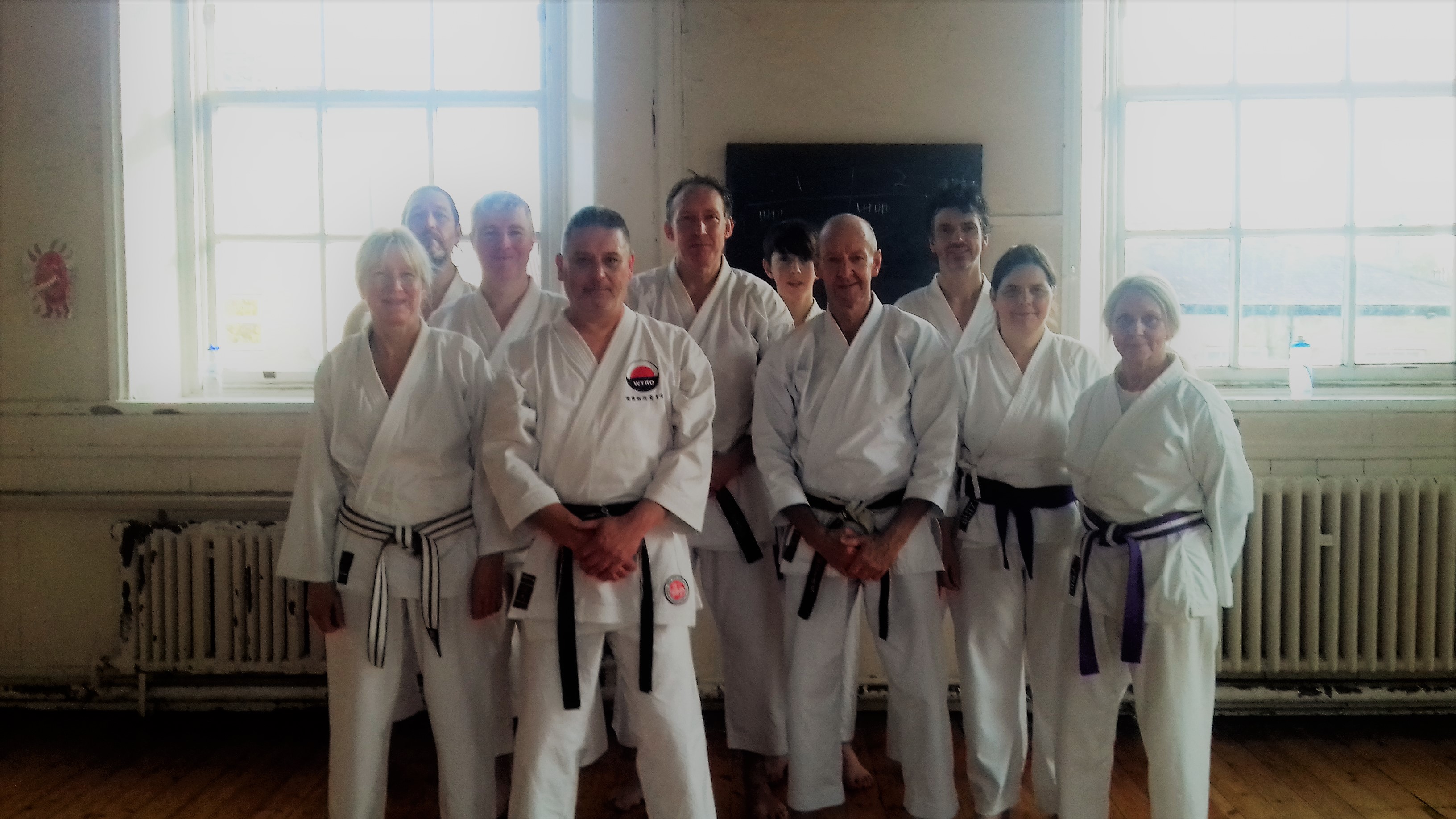
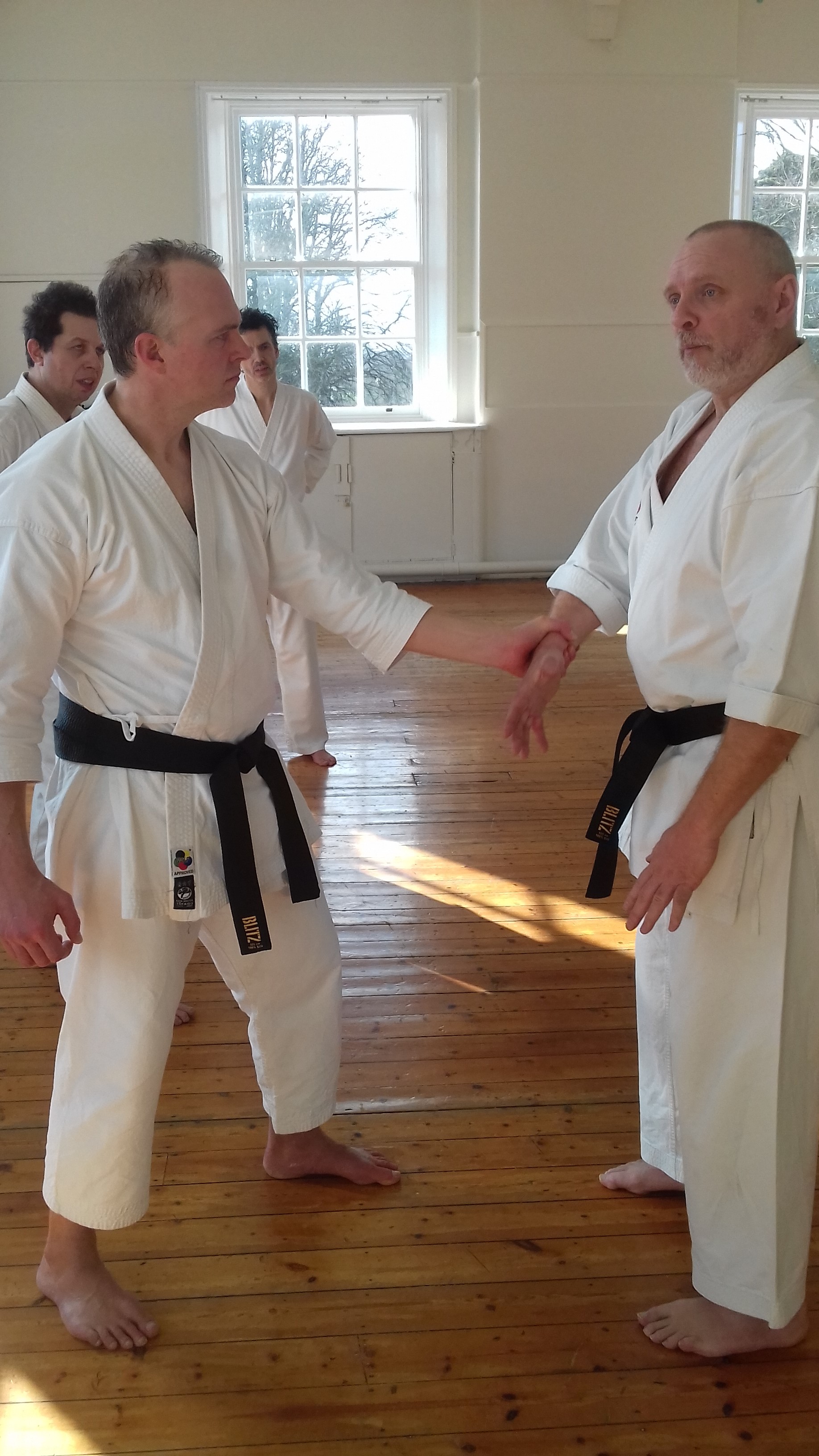
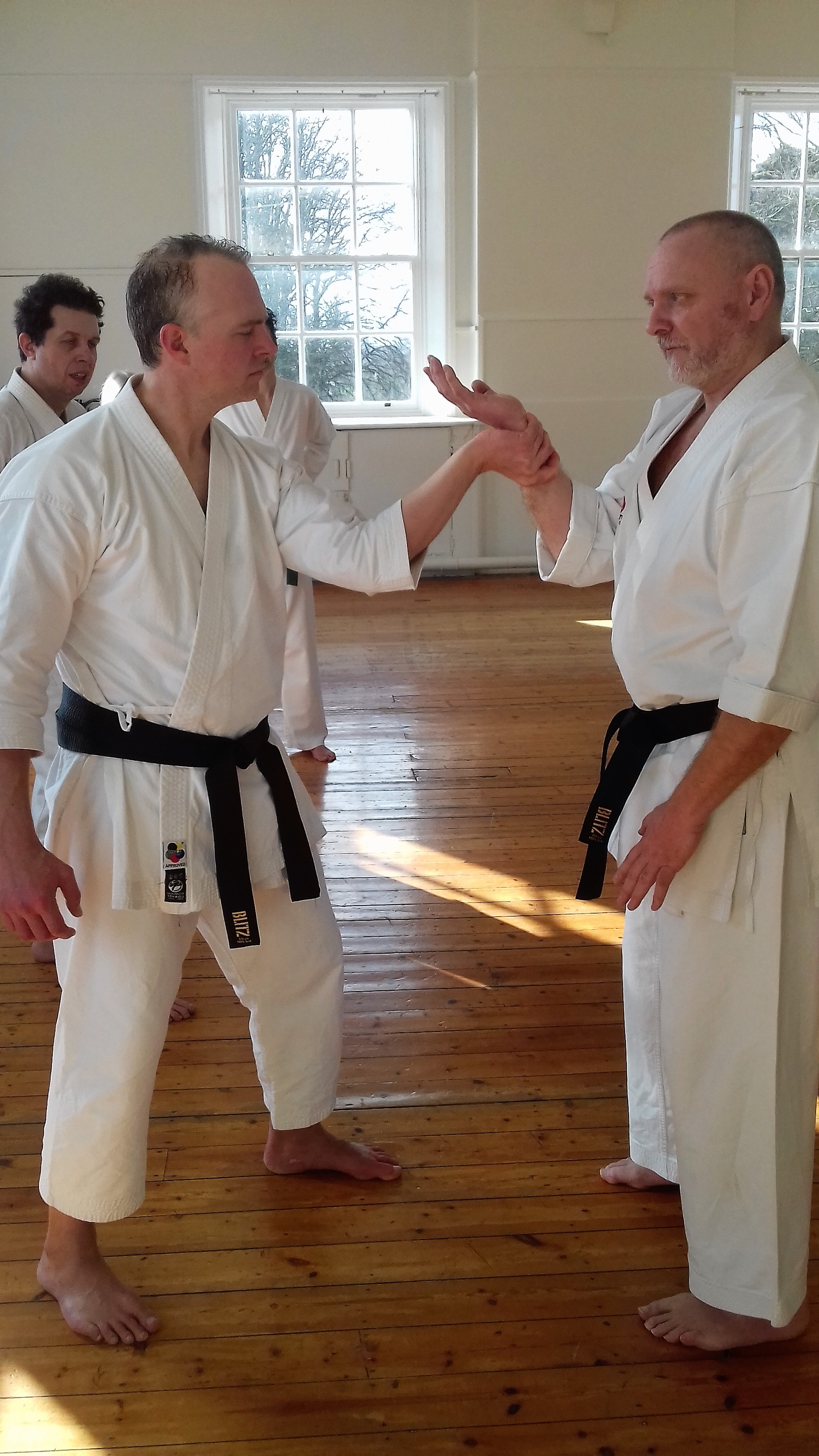
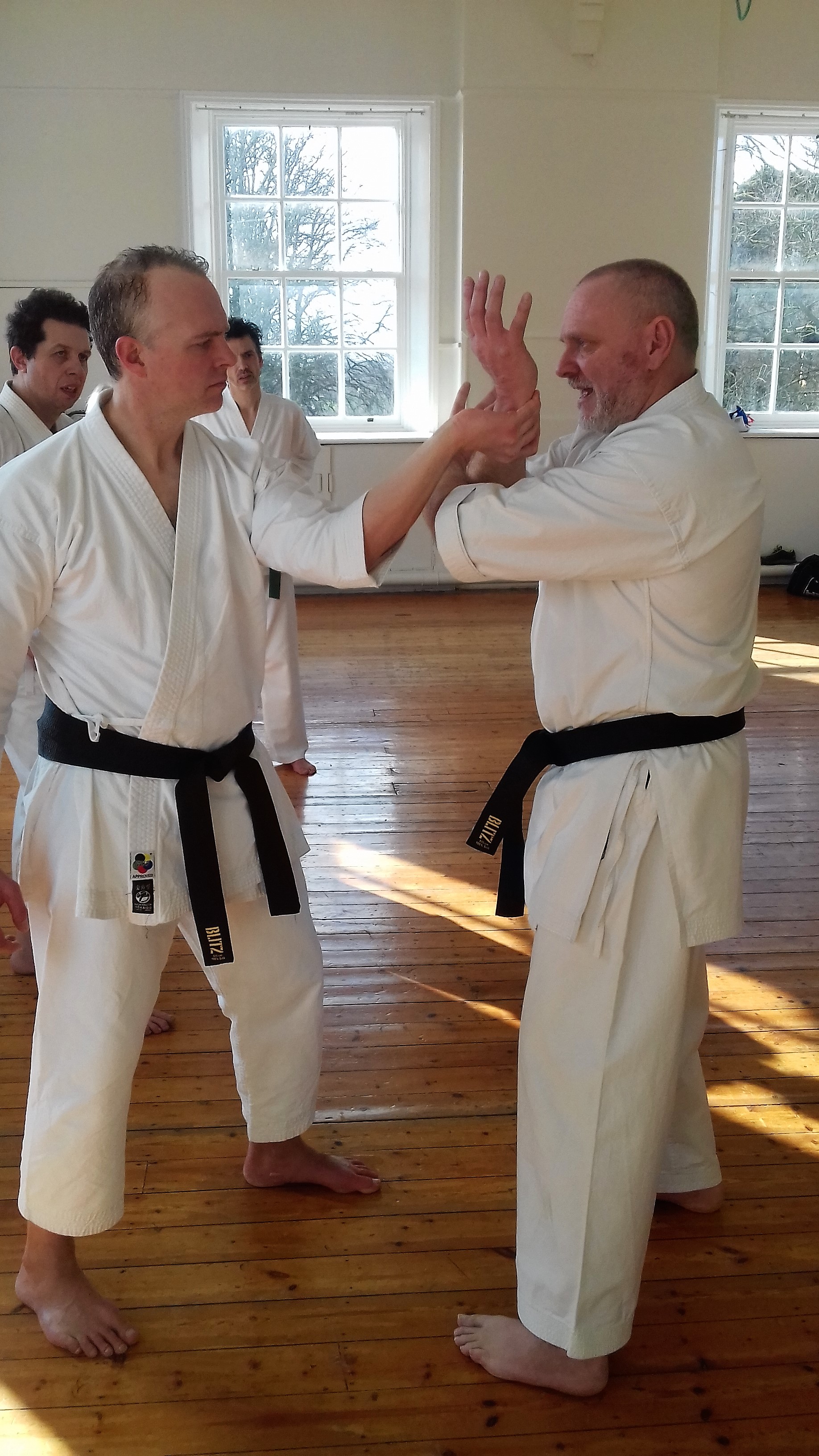
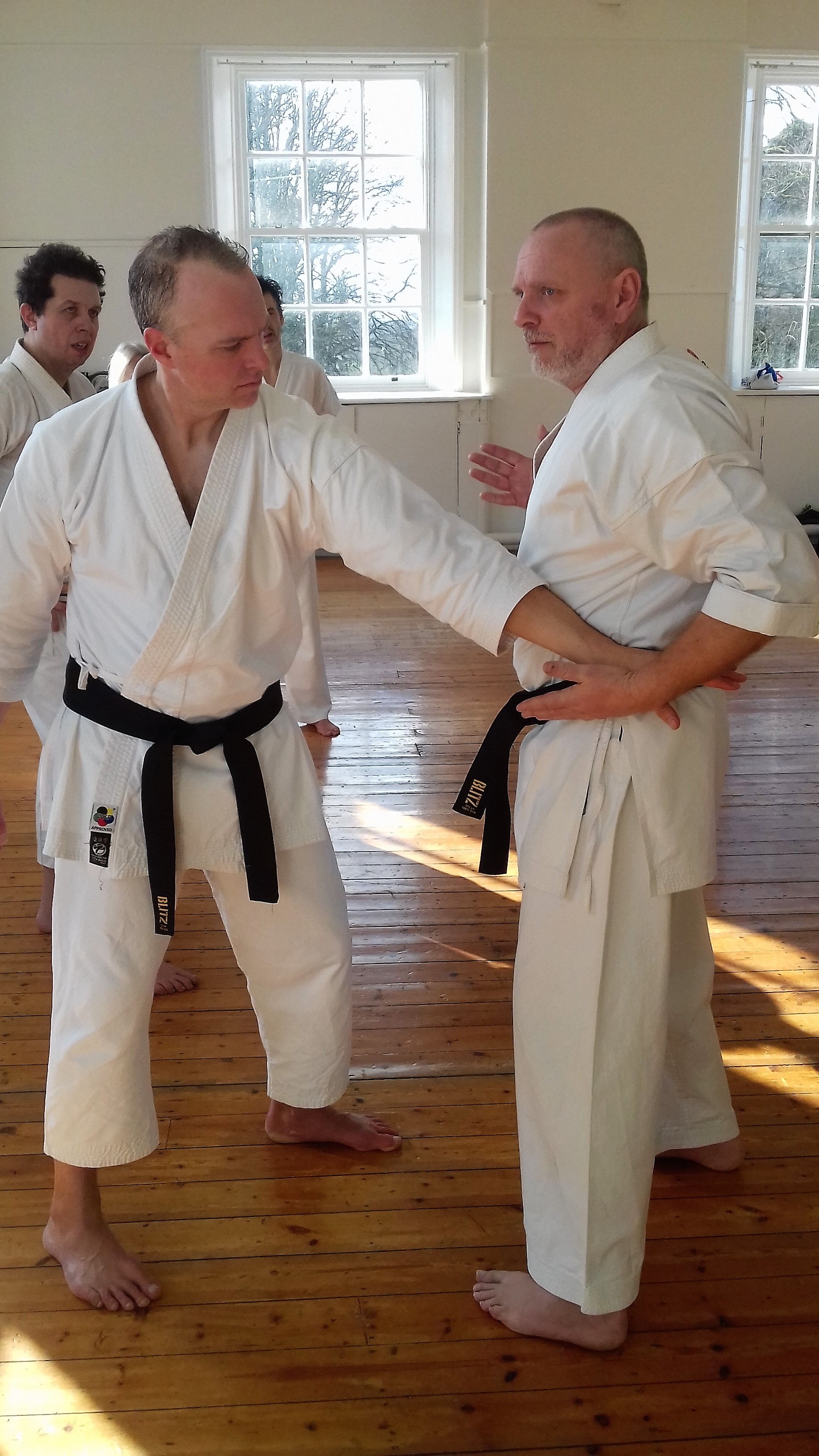
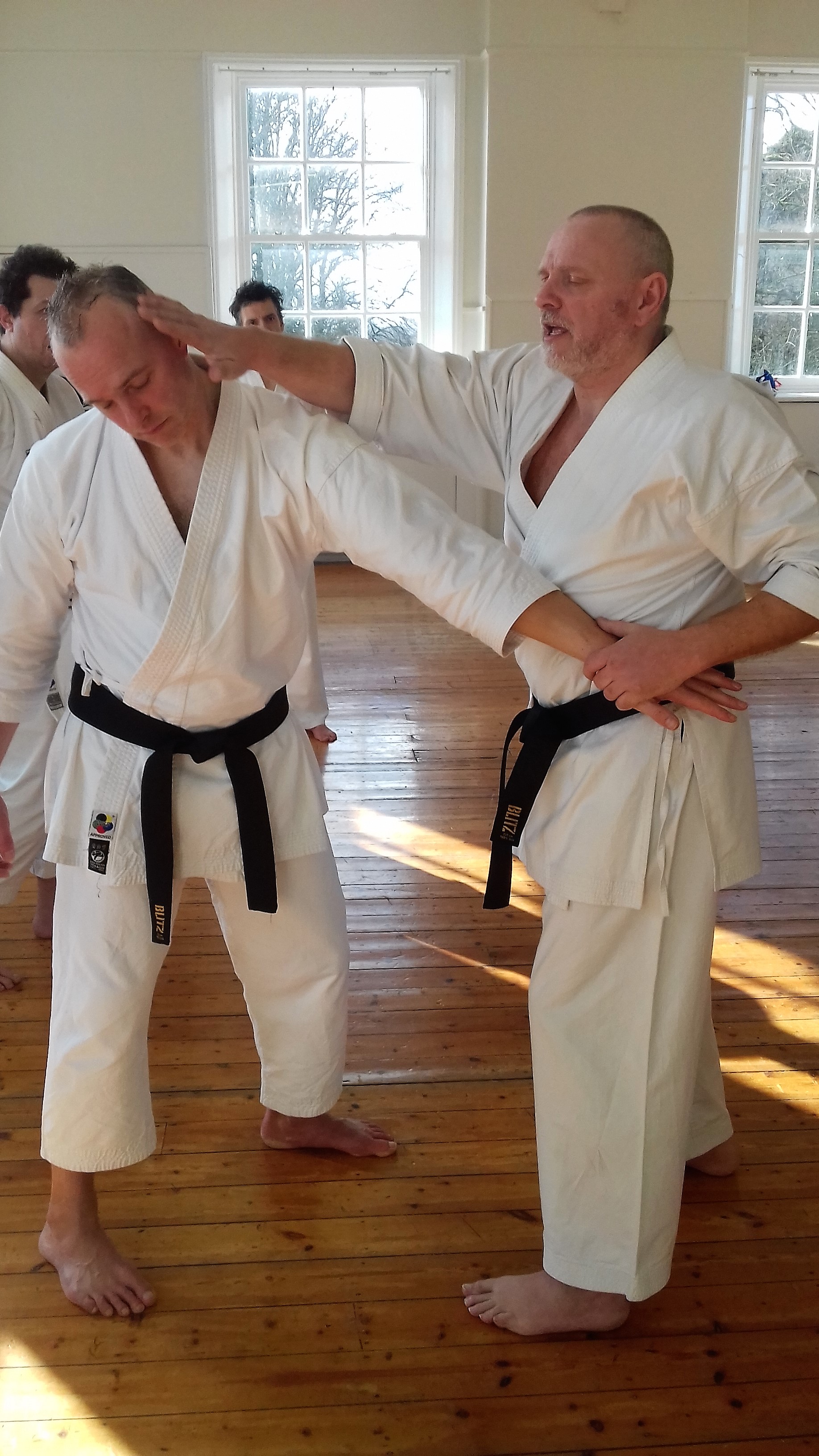

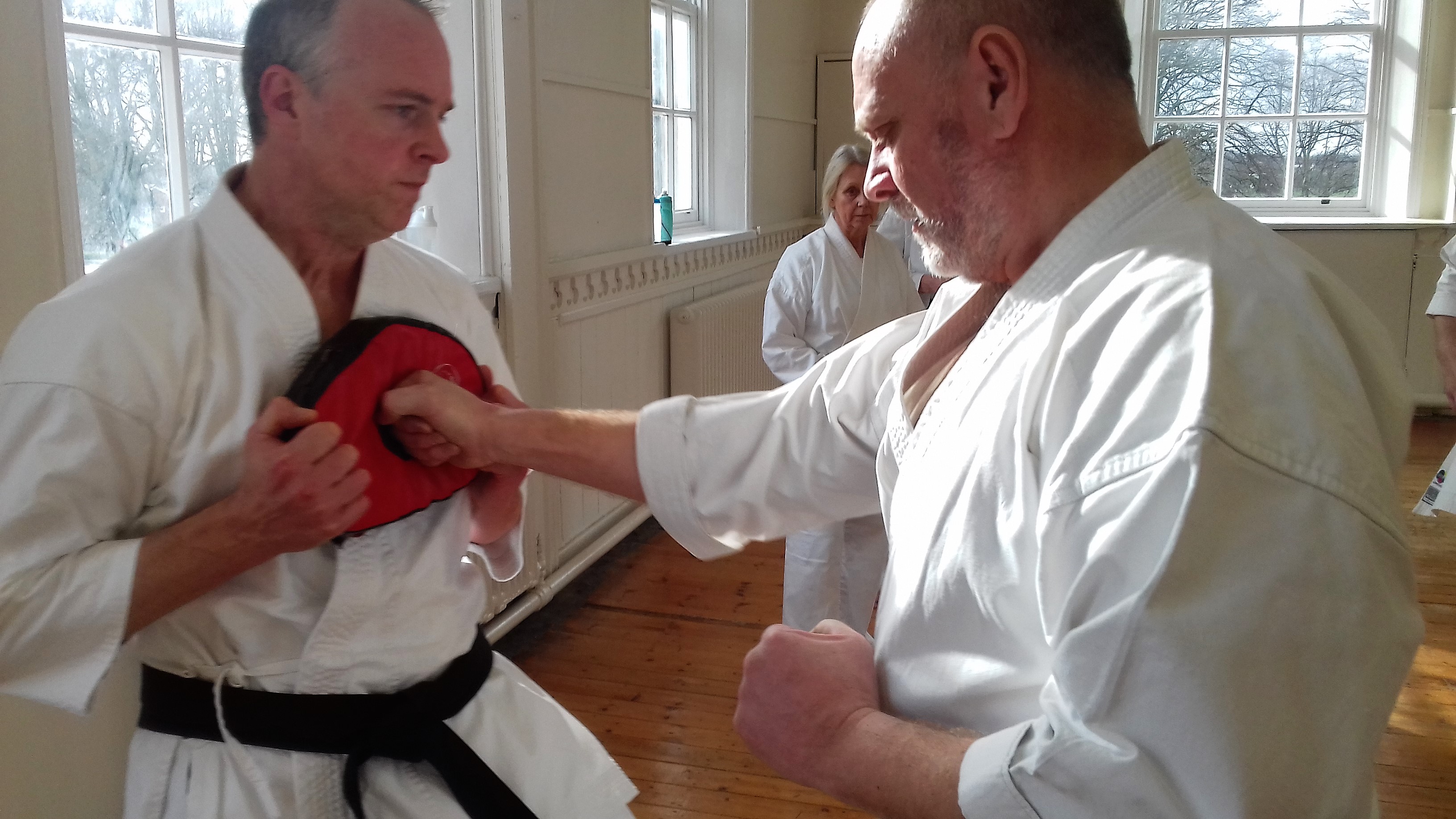
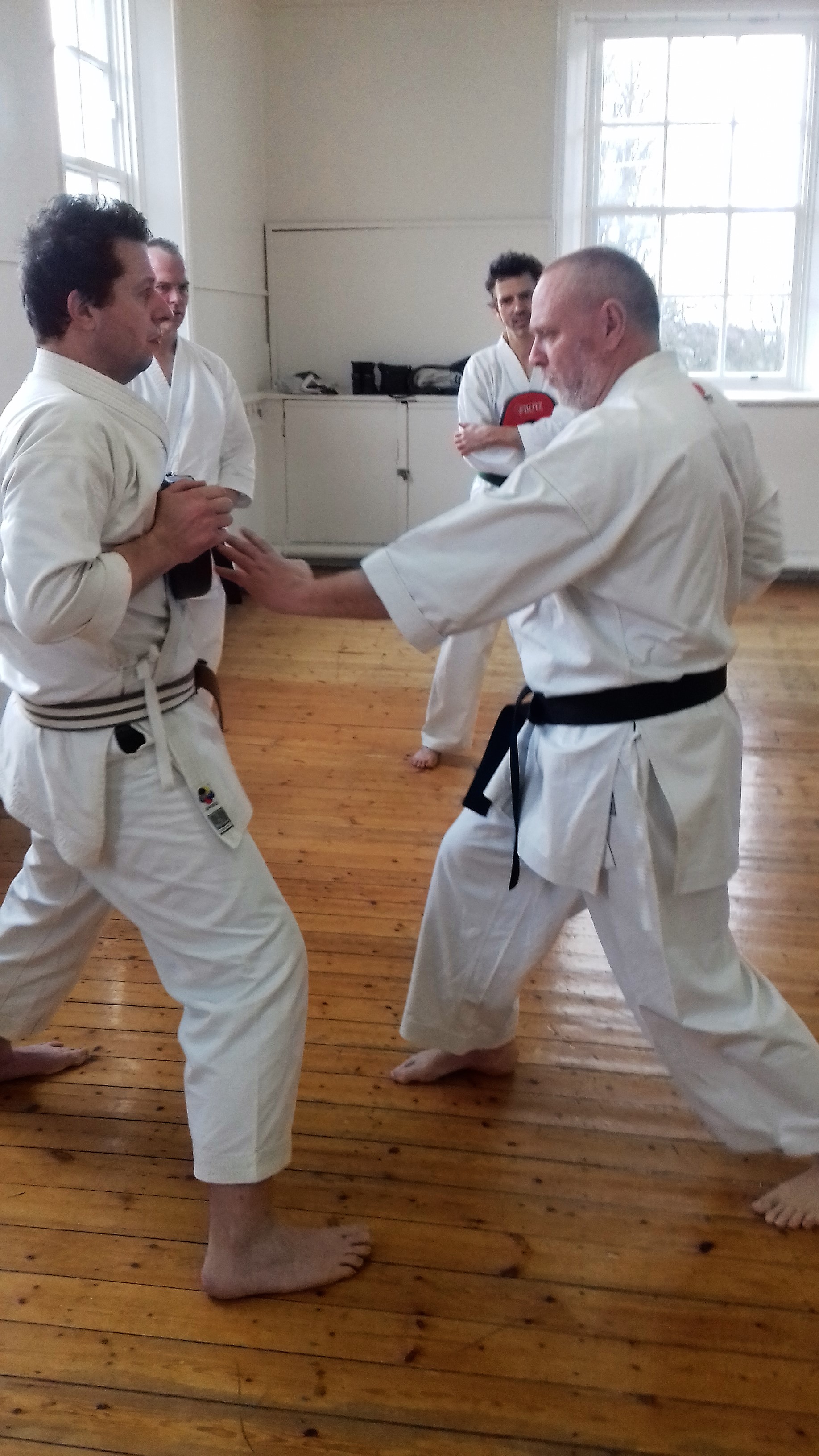
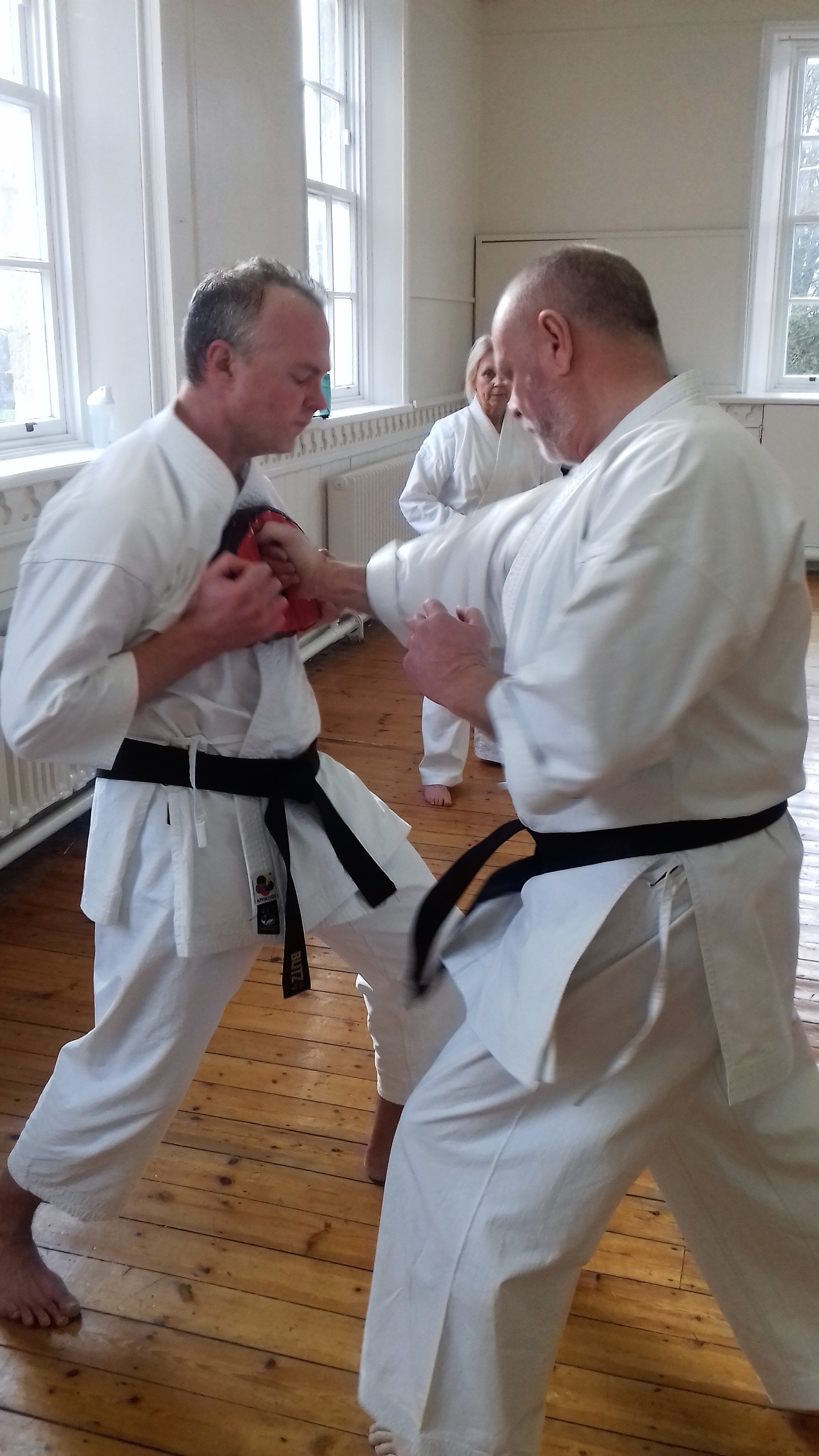
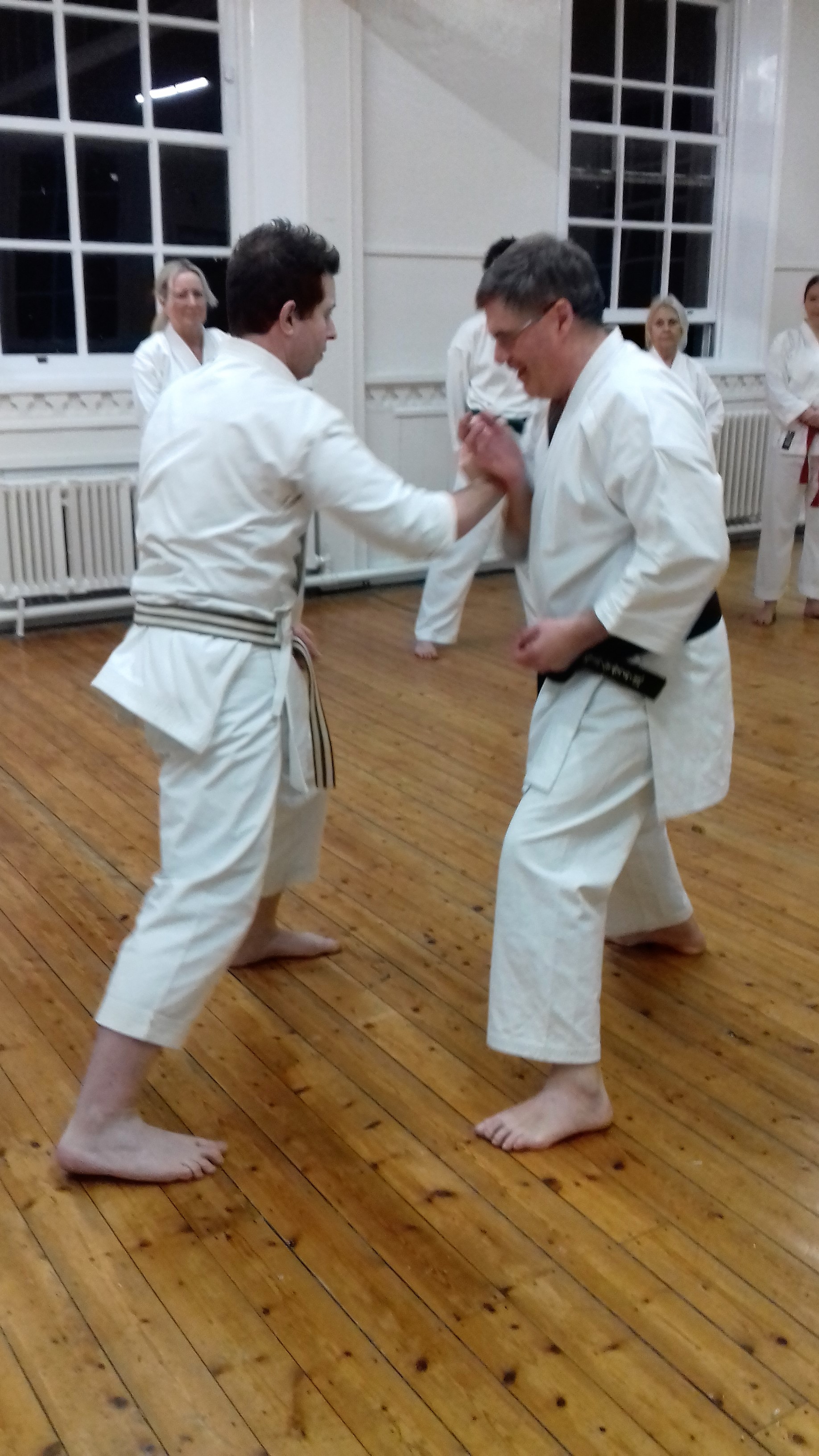

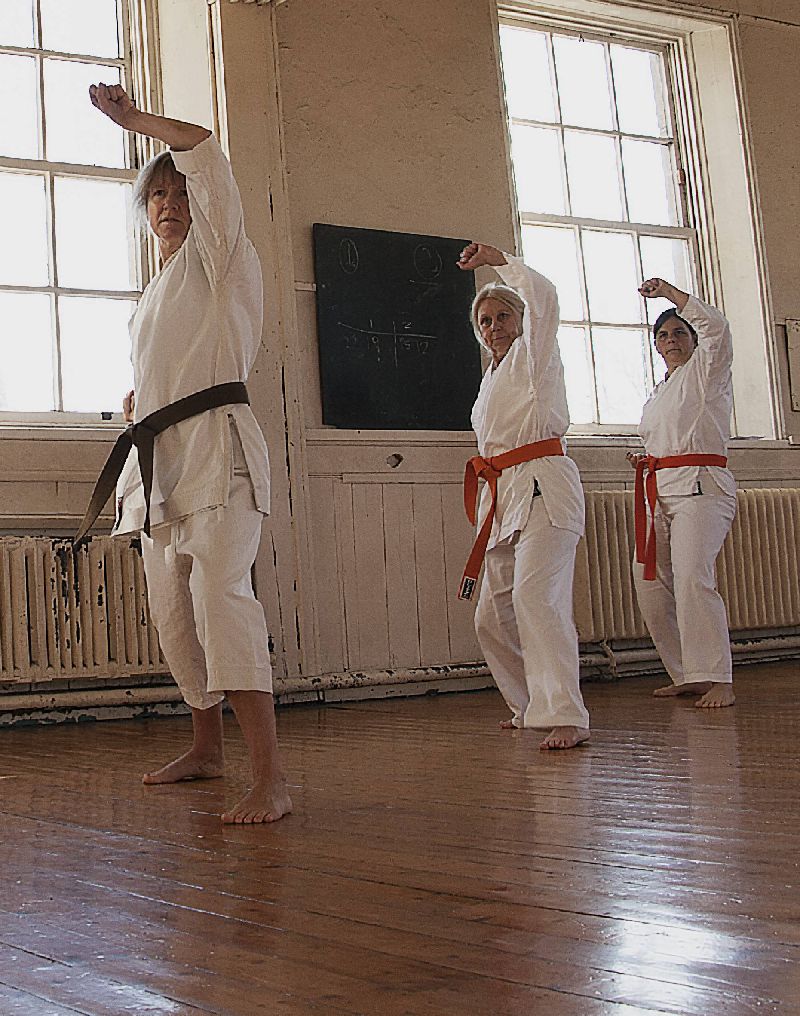
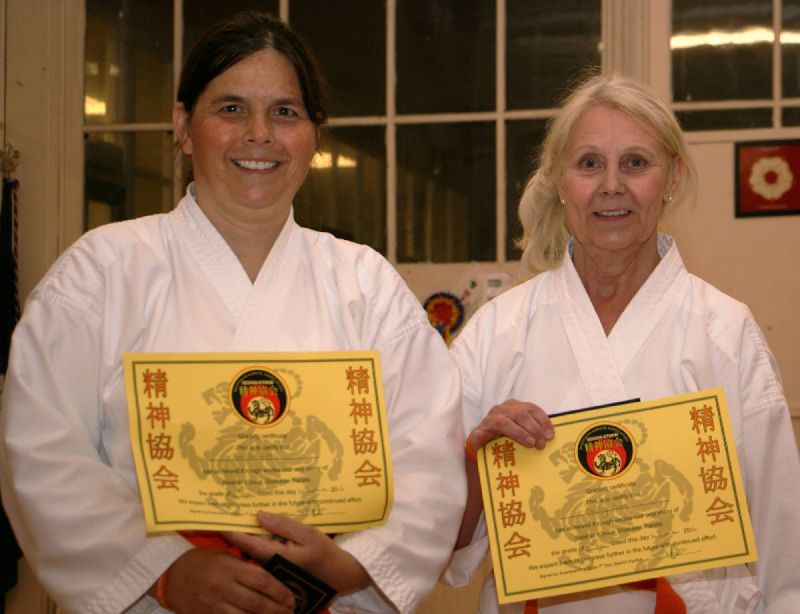
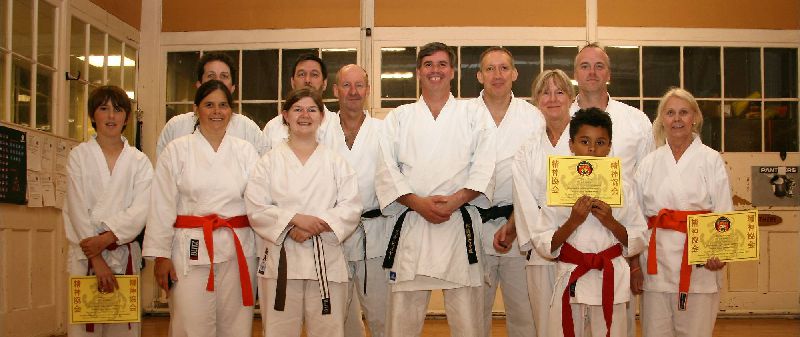
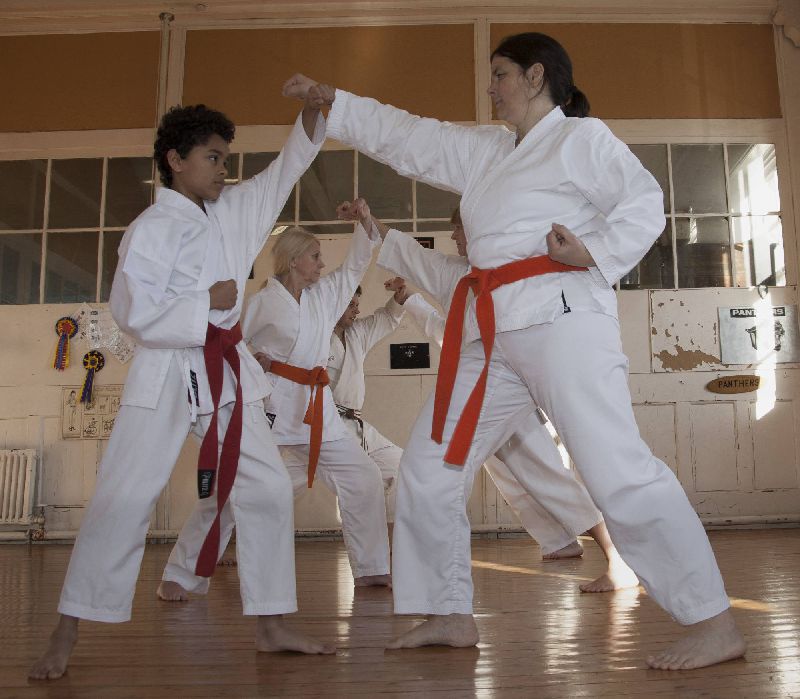
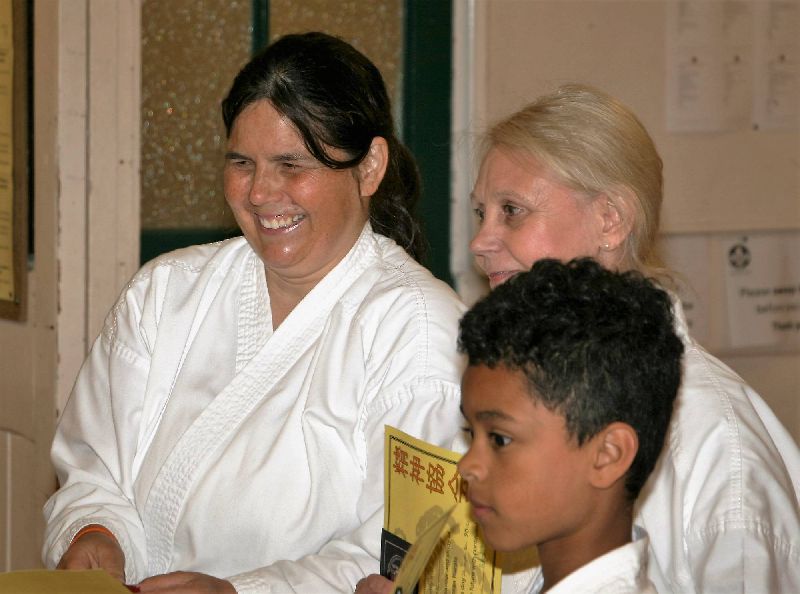
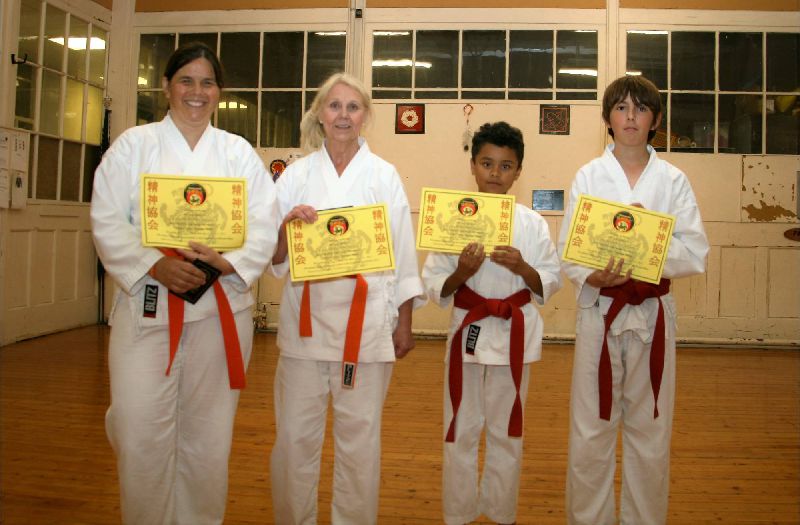
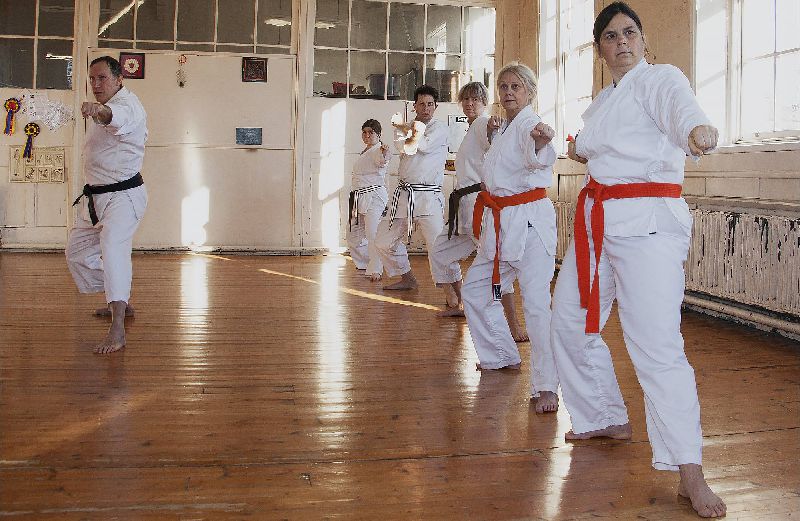
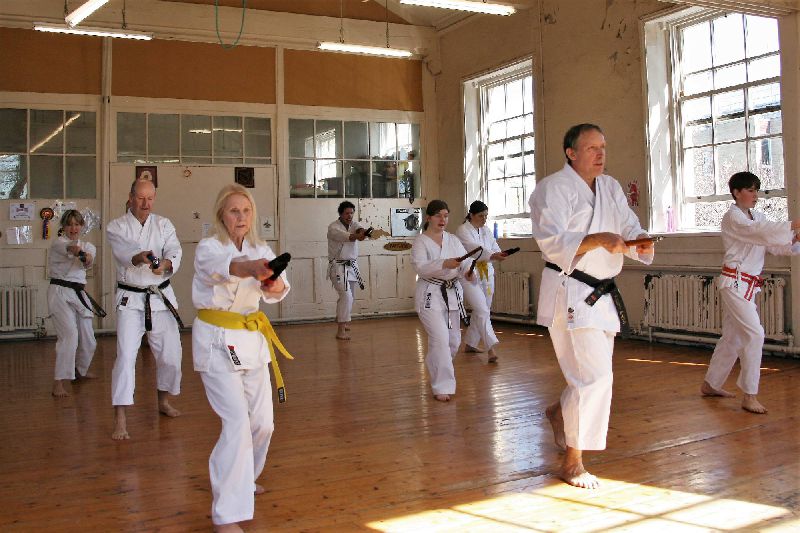
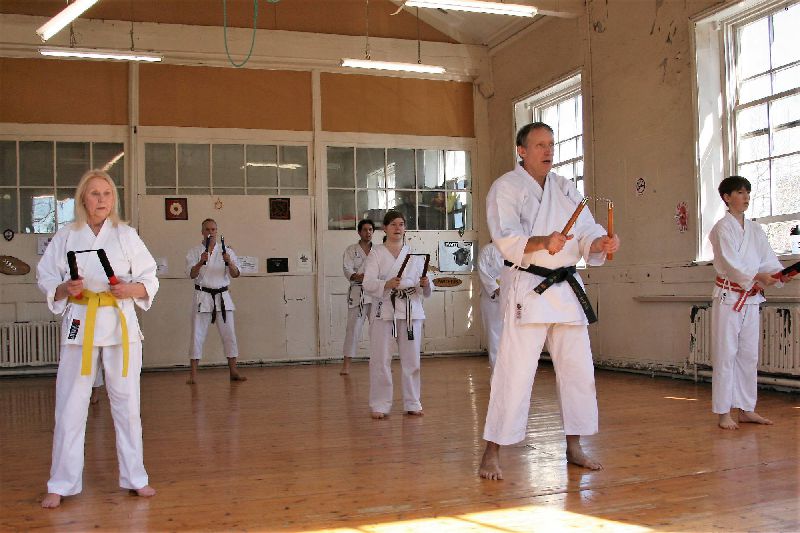
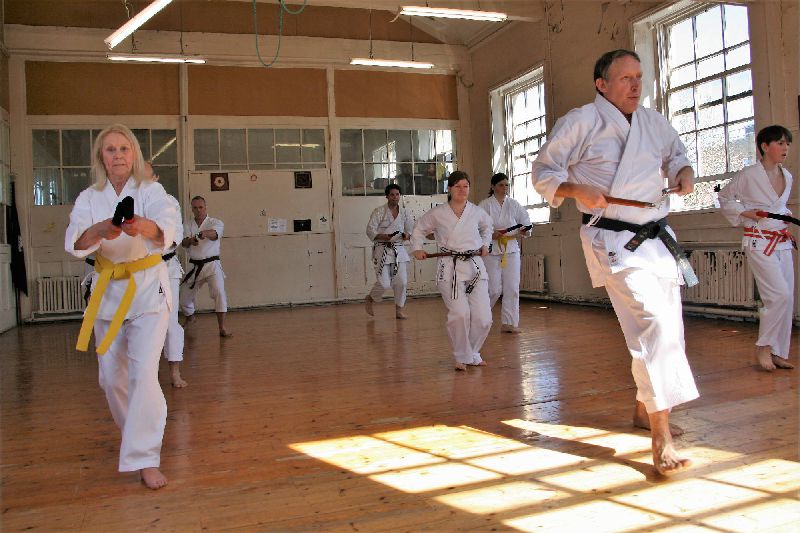
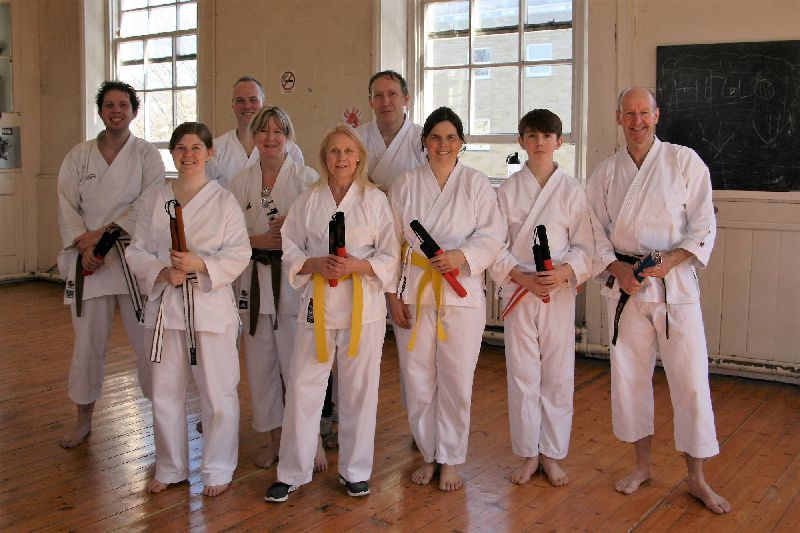
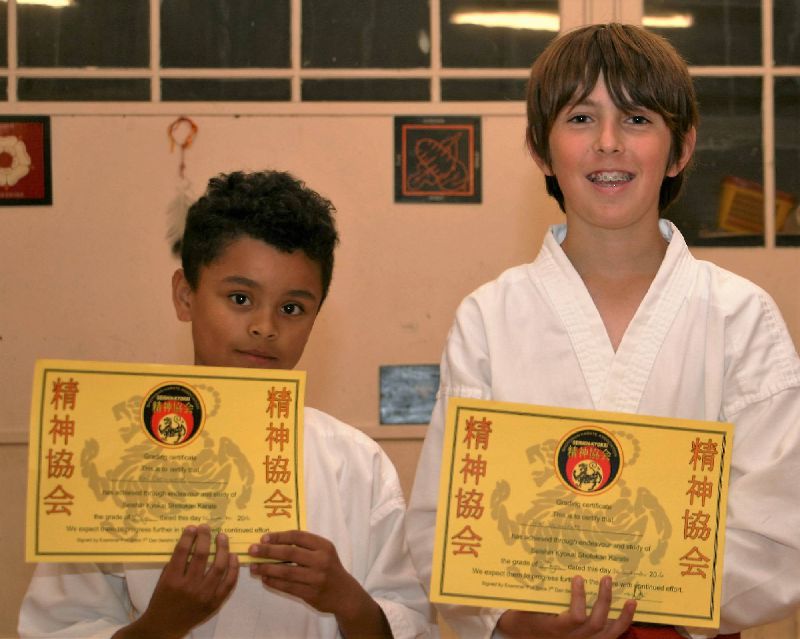
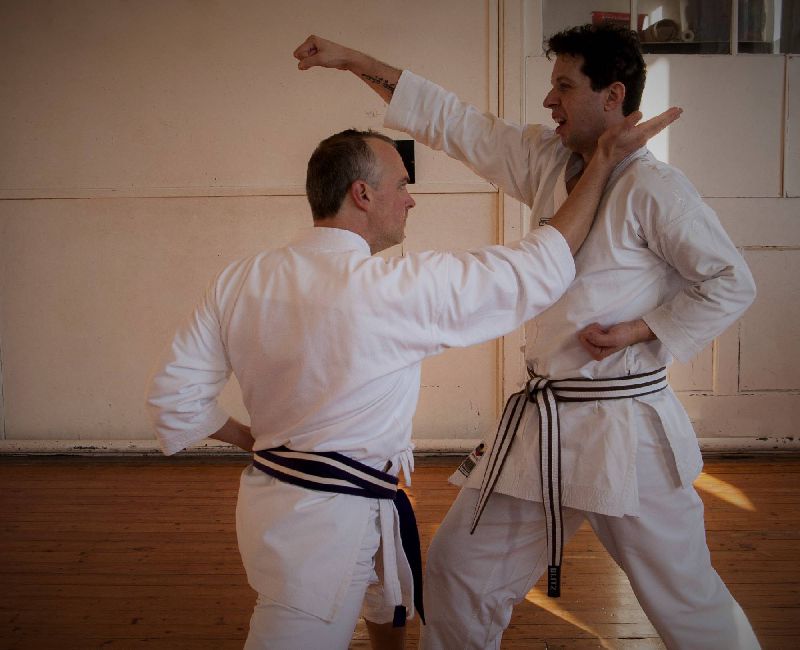
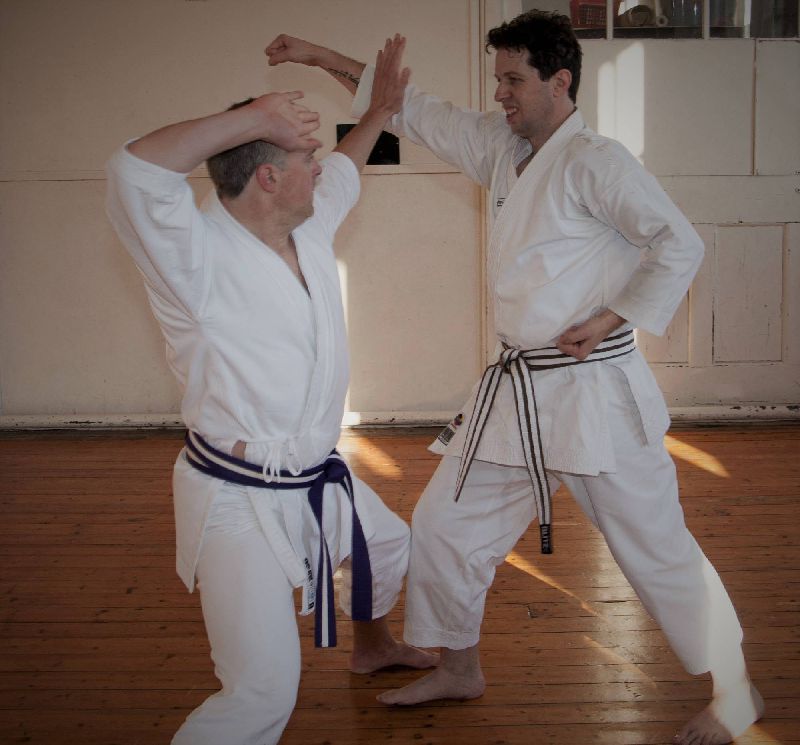
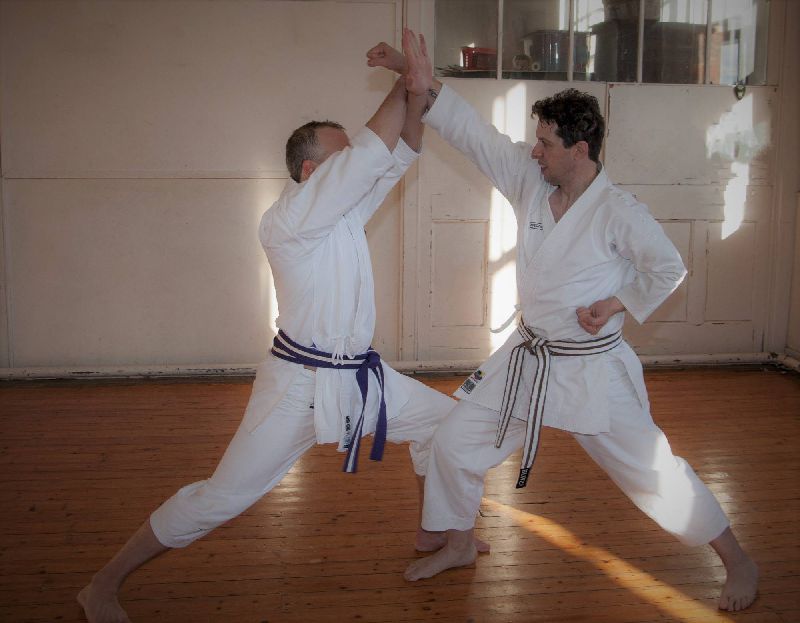
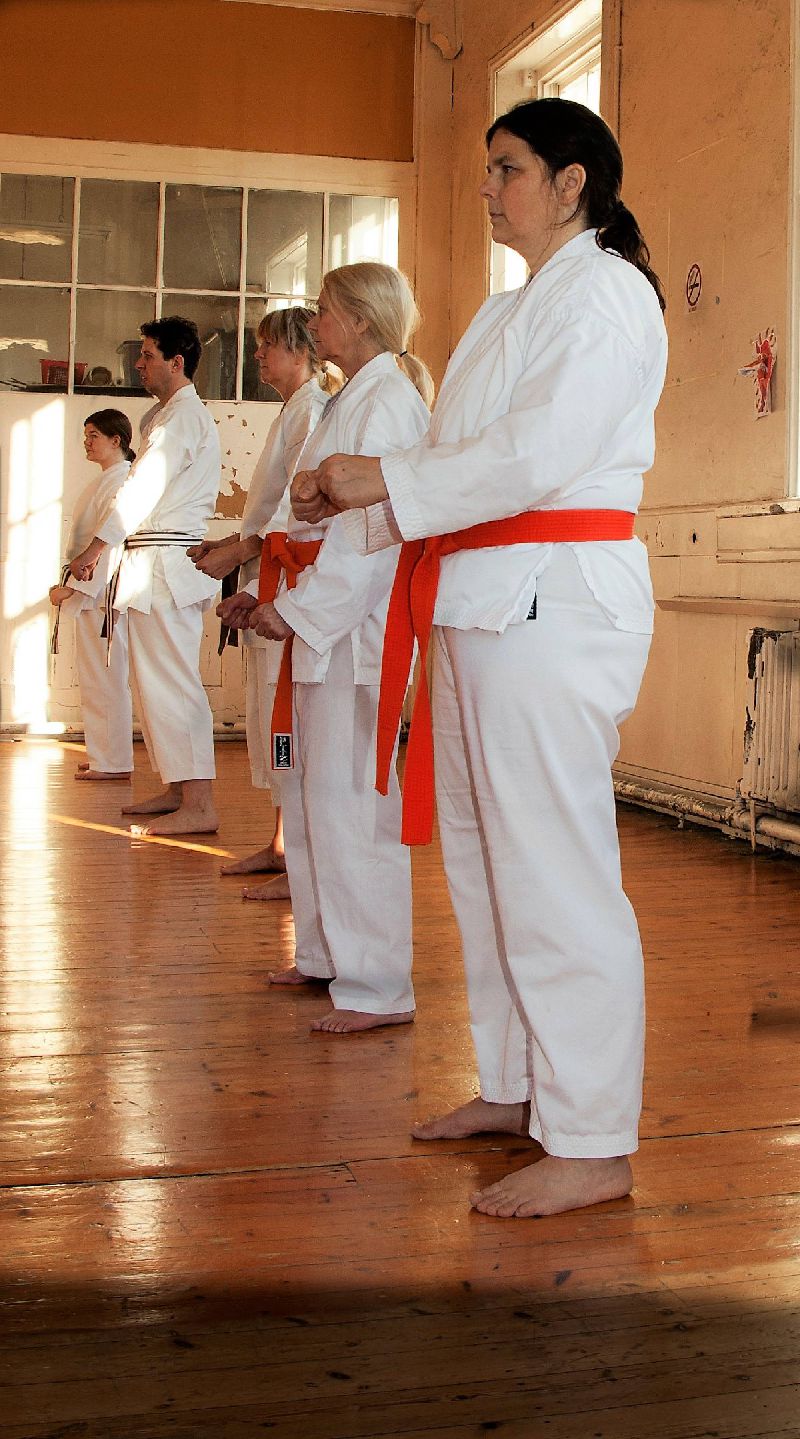
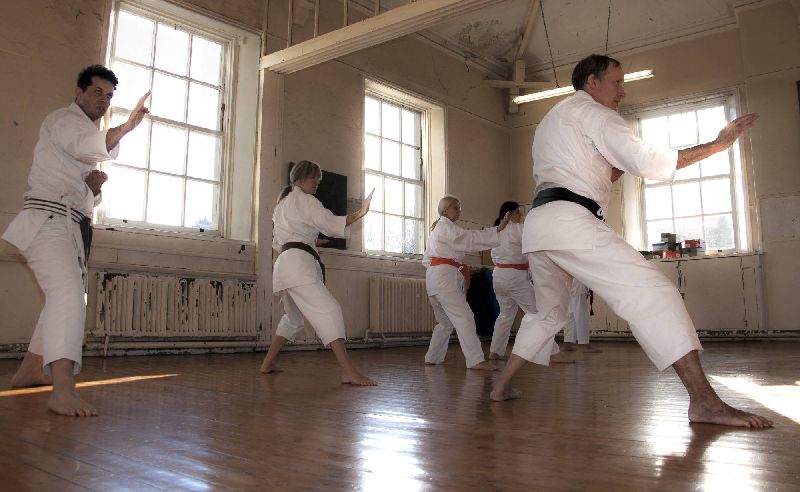
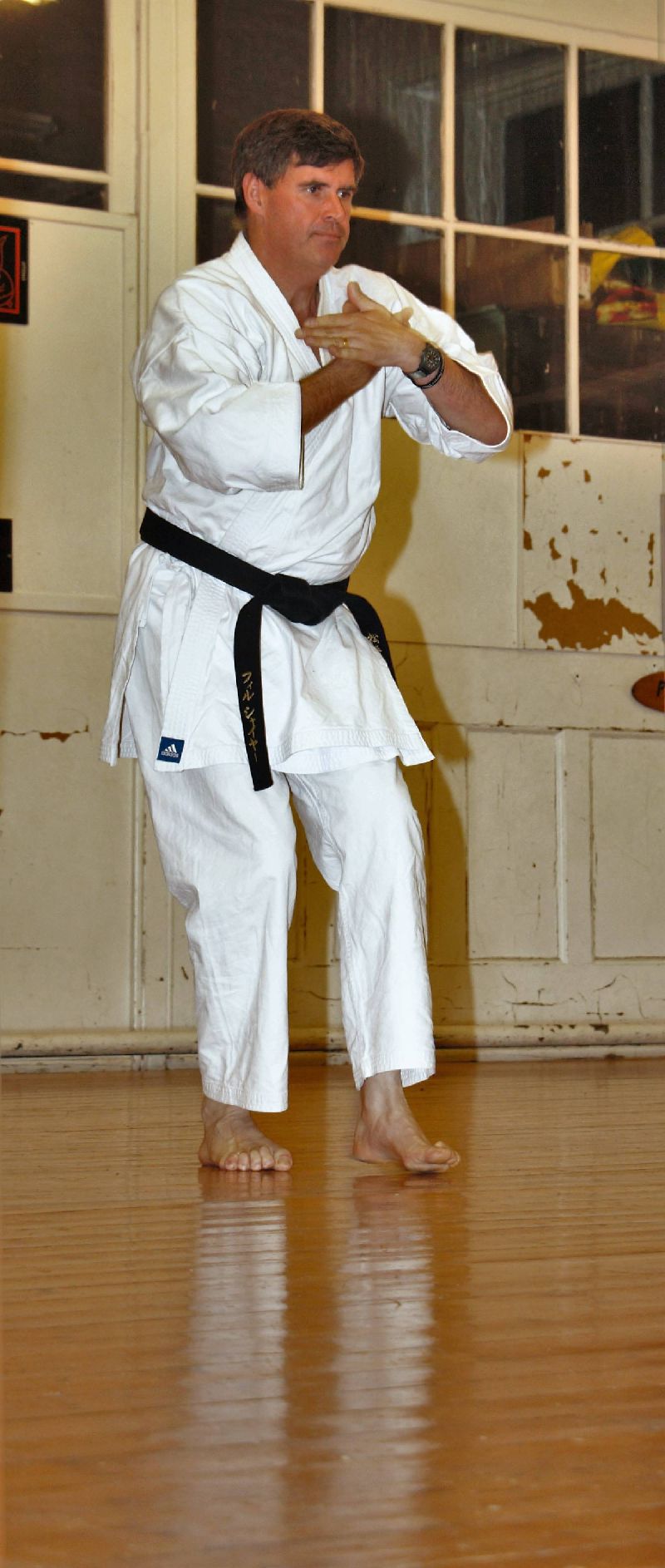


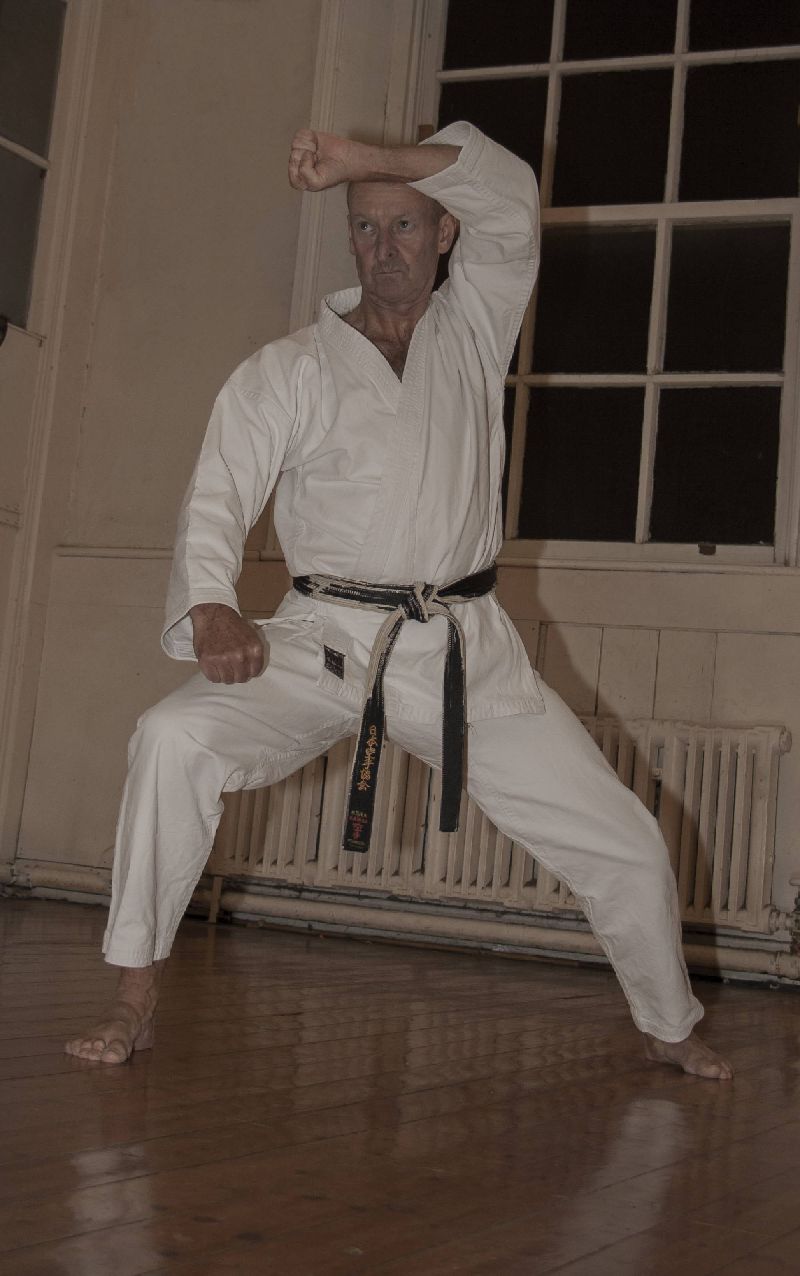
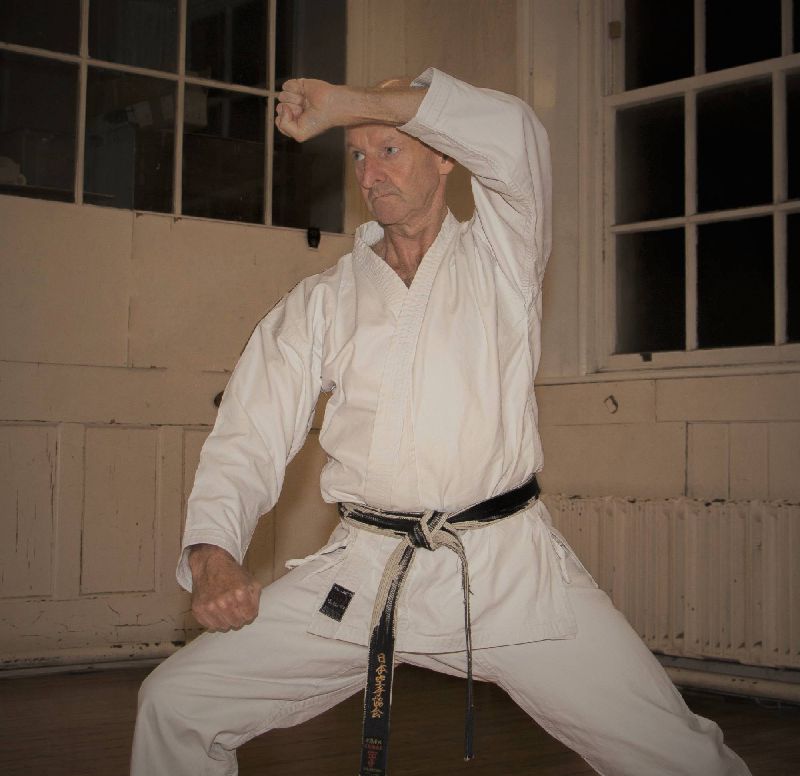

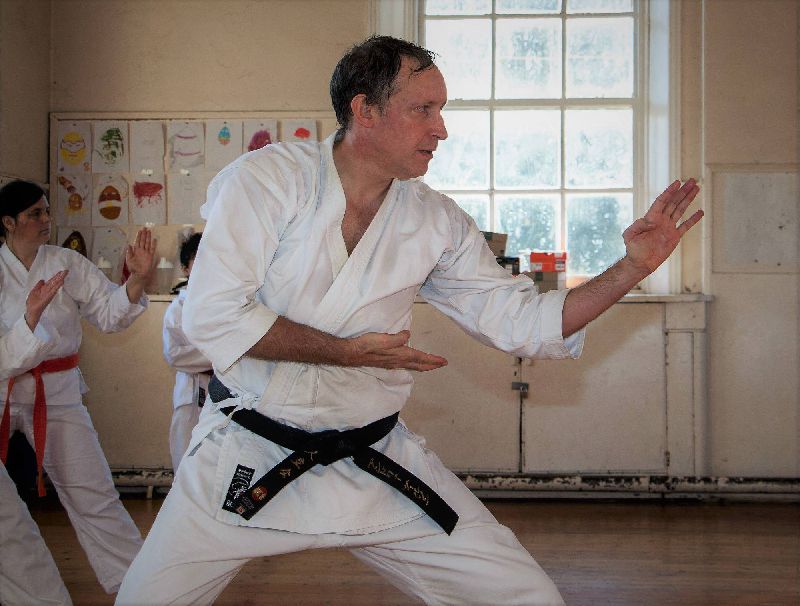

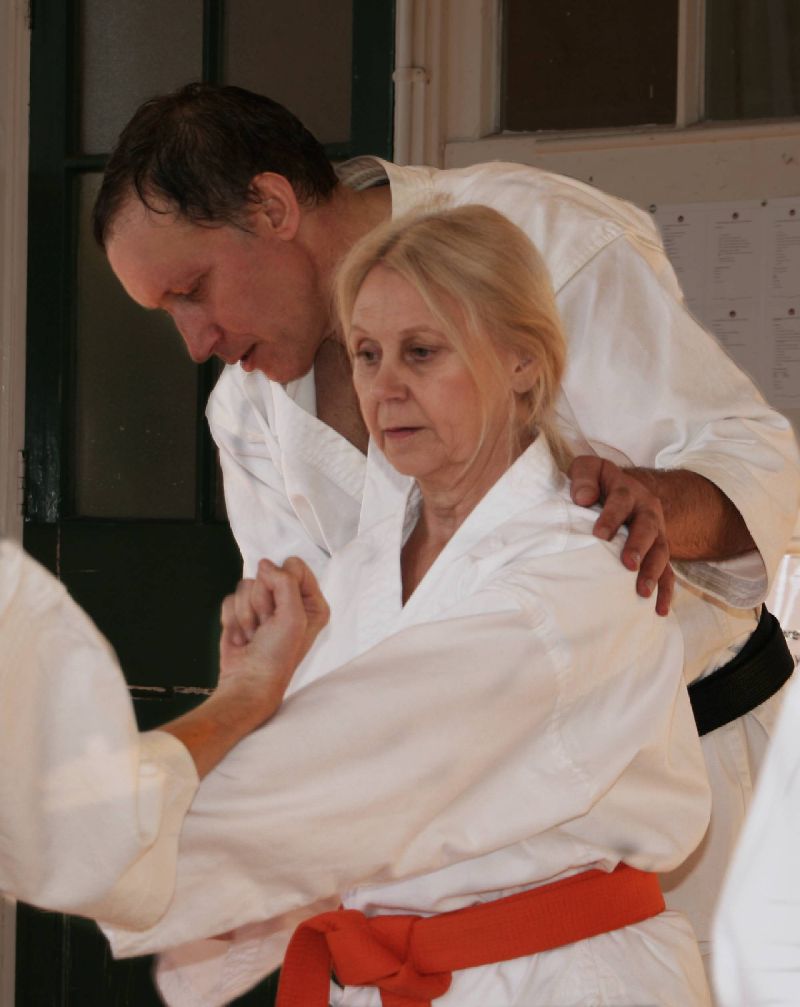
- Hits: 17748
Training in Shotokan Karate
Training in Shotokan Karate can't be described in a few sentences, it has to be experienced first-hand. However, here are a few words outlining the main features.
Kihon
Kihon (or "basics") are the building blocks of karate; the individual stances, blocks and strikes, performed singly or in combination. When executing any karate techniques the right mental attitude is as important as the physical action. All the following elements need to be applied correctly, depending on the situation: speed (or slowness) of movement, physical strength (or relaxation) and extension (or contraction) of the body. The student's entire being, mind and body, has to be focused on the desired outcome, or target, of the technique. Because of this, karate is an excellent way of escaping the stresses of everyday modern life. Correct breathing is essential to karate practice, and this has its own health benefits.
Kumite
Kumite is the practice of karate techniques with a partner. In the simplest form (five step kumite), a single pre-set attack and pre-set defense are performed to the count. Students progress through increasingly more complex one-step techniques to include semi- and fully freestyle fighting. However ferociously this may be executed at higher grades, it must always be non-contact.
Kata
Rather than kumite, as people might assume, the practice of kata is often said to be the key to understanding karate. A kata is a pre-arranged sequence of techniques performed by the solo student in a continual sequence, as well as he or she can possibly perform. As well as being an exacting test of ability, kata is also a 'library' of highly effective unarmed combat or self-defence drills. Many of the kata in the shotokan syllabus were adapted from earlier Chinese and Japanese martial arts that existed before Sensei Funakoshi's time.
There are twenty-seven kata generally regarded as "belonging" to the shotokan style. These cover the entire range of a karate student's training, from Taikyoku Shodan, the first kata learnt by beginners, through to highly advanced forms such as Gojushiho Dai or Gankaku Sho, which are usually only practiced by experienced black belt students. Learning to perform all these kata well and understanding the meaning of all the movements in them will often take decades of training. Many of these kata also exist in different forms, with different names, in other karate styles. Some of these are included in the Seishin Kyokai syllabus.
Etiquette
Karate, as a Japanese martial art, has a certain amount of ritual and etiquette associated with it. While some of this simply expresses karate's place of origin (the names of the various techniques, commands and other terms used are Japanese), it also provides a useful basis for the discipline necessary for everyone to train safely in the dojo, and for students to conduct themselves properly outside the dojo and not misuse the skills they are taught.
Subcategories
- You are here:
-
Home

-
Karate at the Shadwell Karate Club
-
Training & Gradings
-
Training
- Our Club